There are easier ways to make a Crocs collaboration than to make the viewer look twice for Crocs. Kiko Kostadinov’s VAALS avoids the obvious joke of a familiar clog with a fashion name attached. Instead, it assembles a moc-toe upper, technical fastening and a substantial band into a shoe that seems to belong to several practical wardrobes at once. Its strangeness is structural, not decorative.
The useful object, pulled sideways
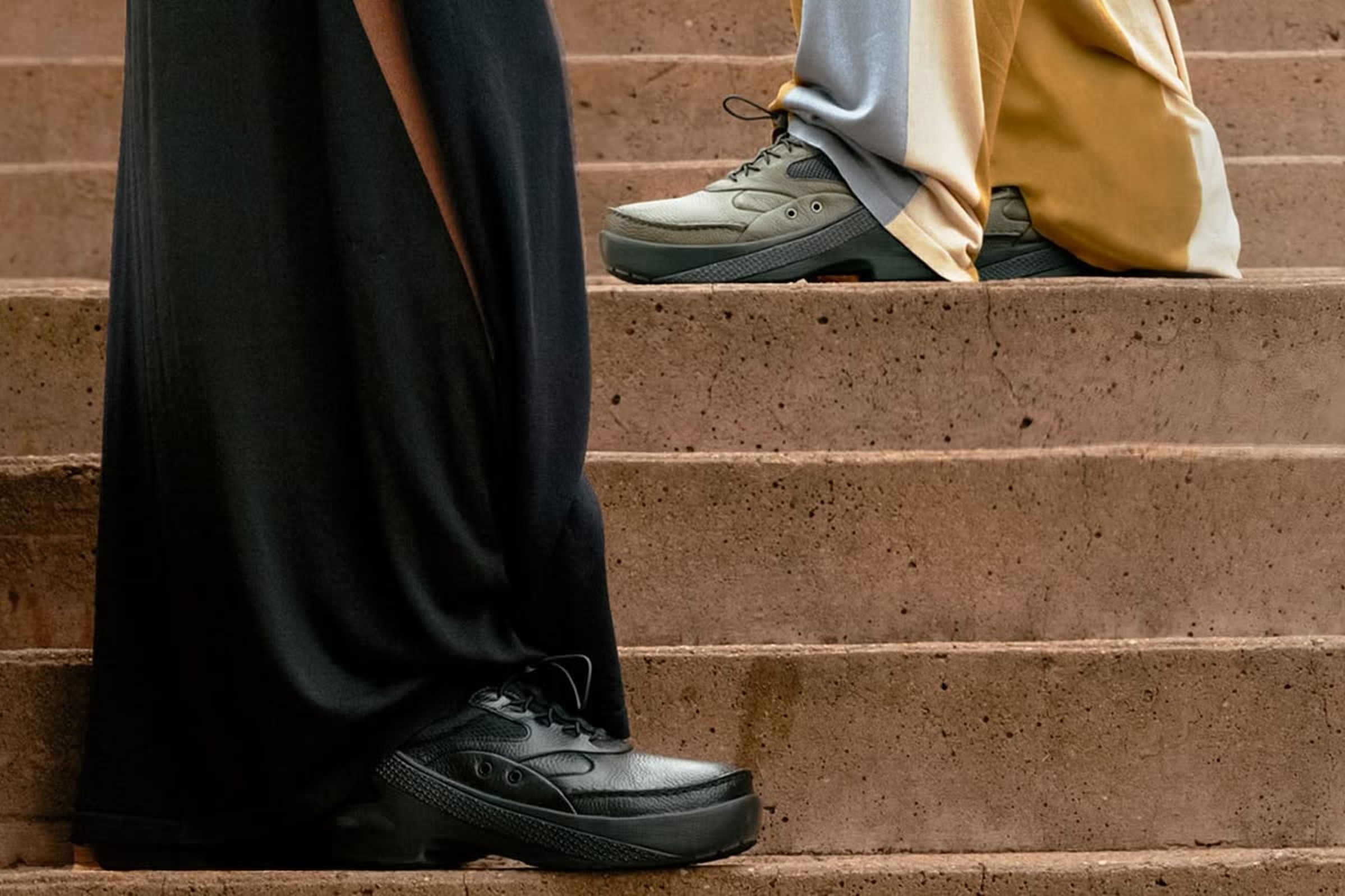
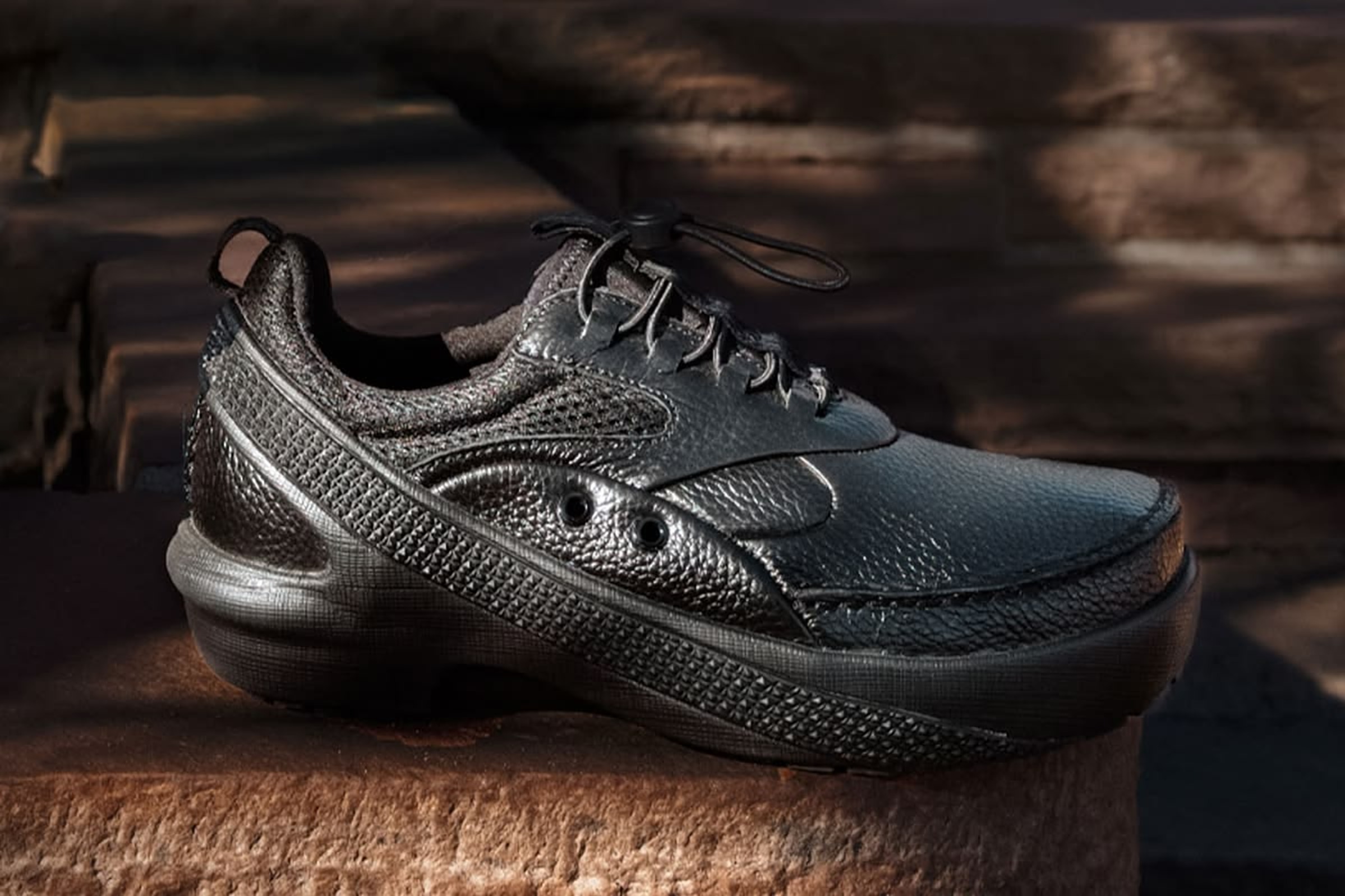
The official description starts with a moc-toe construction and heavy-gauge stitching. Genuine tumbled leather sits alongside breathable sandwich mesh. A custom-moulded TPU band draws on the Crocband and archival Genna, while toggle bungee lacing and a heel pull keep the fastening language utilitarian. Beneath that assembly are a rubber outsole and Crocs’ LiteRide footbed.
Those details explain why the result is more interesting than an exercise in luxury camouflage. The leather does not erase the technical components, and the mesh does not pretend to be formal footwear. The seam around the toe gives the eye a traditional construction to recognise before the band interrupts it. Familiarity becomes the means of producing uncertainty.
Comfort is not the opposite of a concept
Fashion commentary often treats comfort as the dull thing designers must overcome. VAALS suggests a different relationship. A cushioned footbed, pull tab and quick fastening can remain visible parts of an experimental silhouette. The conceptual move is not to make a useful shoe useless, but to rearrange the signs by which usefulness is normally recognised.
That does not make every performance implication fair game. Crocs’ cushioning language is not evidence of specialist hiking certification, and a technical appearance should not become a claim about terrain. What can be discussed confidently is the design tension: stitched leather associated with familiar footwear traditions meeting moulded components associated with industrial manufacture.
Colorado is part of the picture
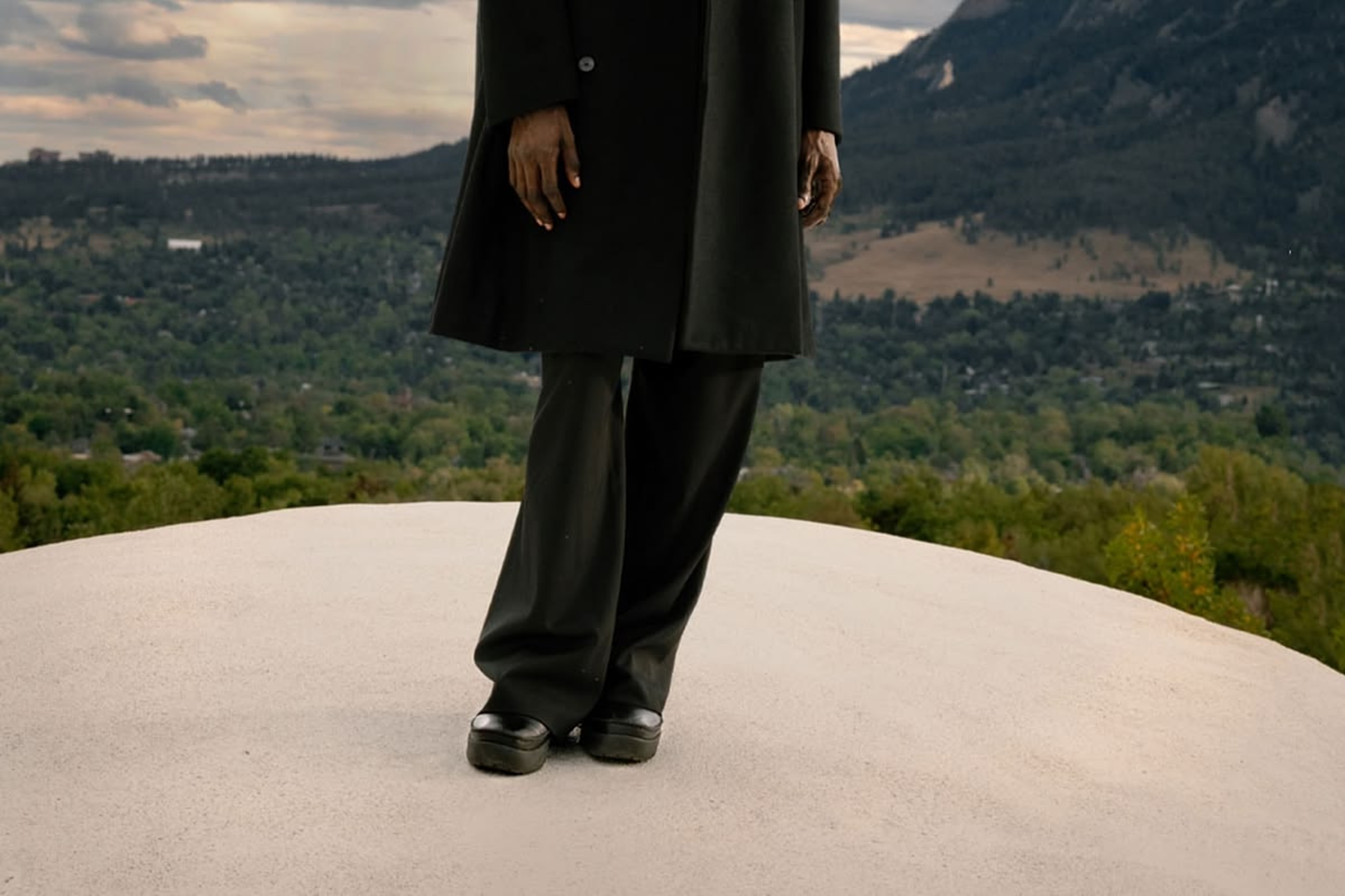
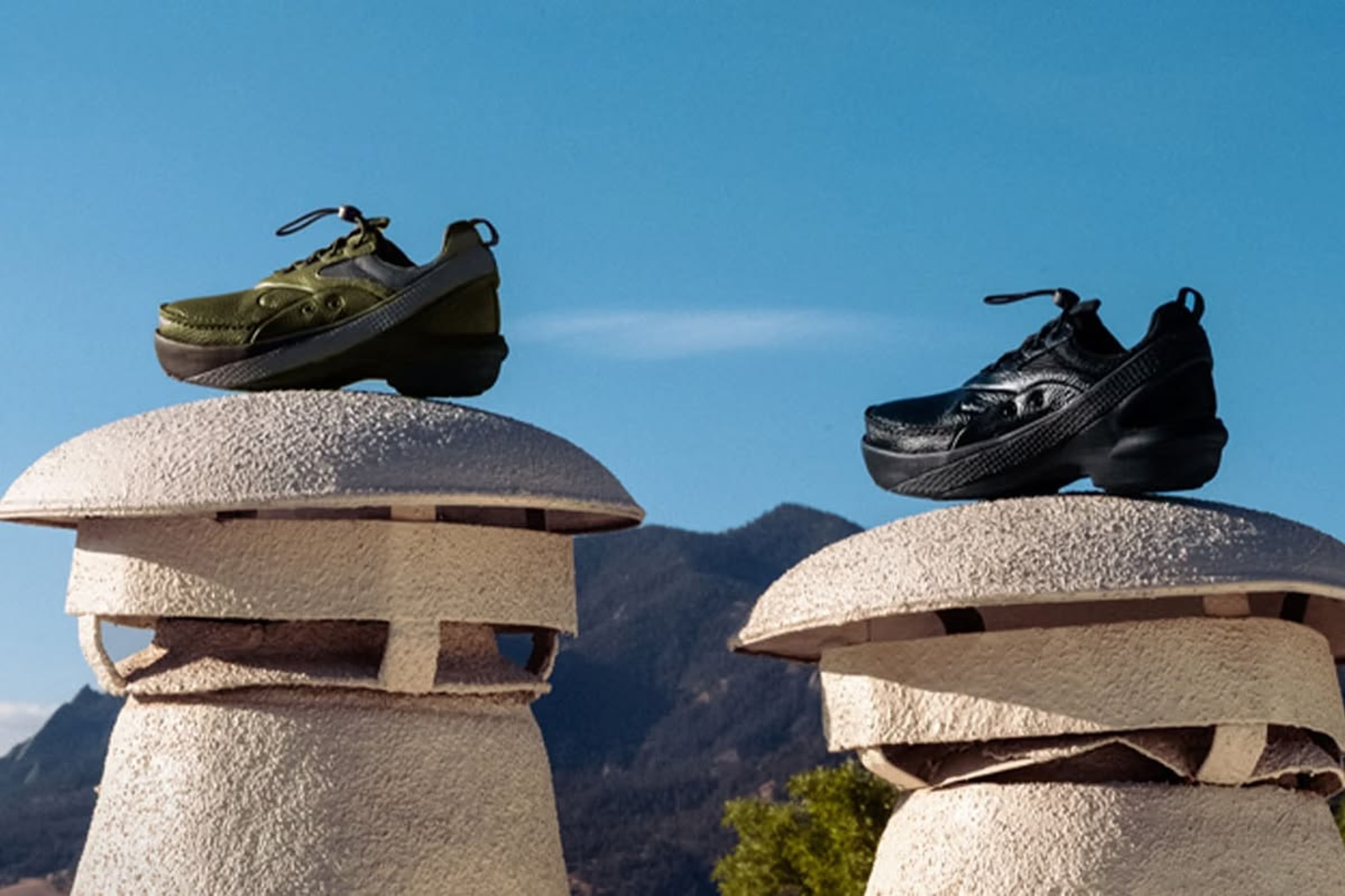
Jim Mangan photographed the campaign near Crocs’ Boulder, Colorado headquarters. The designer’s official page names Red Rocks and the Mushroom House as its two locations. It identifies the latter as a 1969 Charles Haertling design commissioned by Barbara and Stanley Brenton. The campaign therefore situates the collaboration within Crocs’ home landscape rather than treating the brand as an anonymous factory for a fashion idea.
There is a productive visual conversation here. Sandstone formations and organic architecture provide a setting for footwear built from curved, apparently mismatched components. That is an editorial reading of the relationship, not a claim about an unreported creative brief. The official account also states that the shoes were styled with Kiko Kostadinov Menswear Autumn Winter 2026, having debuted on that collection’s January 2026 Paris runway.
Three colours, no invented countdown
The checked product page lists Black, Kelp and Yellow Sand, with Yellow Sand identified as a Kiko Kostadinov exclusive. An exact retail launch date was not established by the inspected source. The distinction between the documented runway debut and the unconfirmed retail day needs to survive publication.
VAALS works because it resists the most predictable version of designer Crocs: a recognisable object plus a loud intervention. Here the recognition arrives in fragments. The shoe is neither embarrassed by utility nor fully obedient to it. Its best provocation is that comfort can look unresolved—and that unresolved design can still have somewhere to go.
That uncertainty is productive. A utilitarian reference becomes more interesting when it cannot be reduced to one familiar silhouette or a single styling instruction.