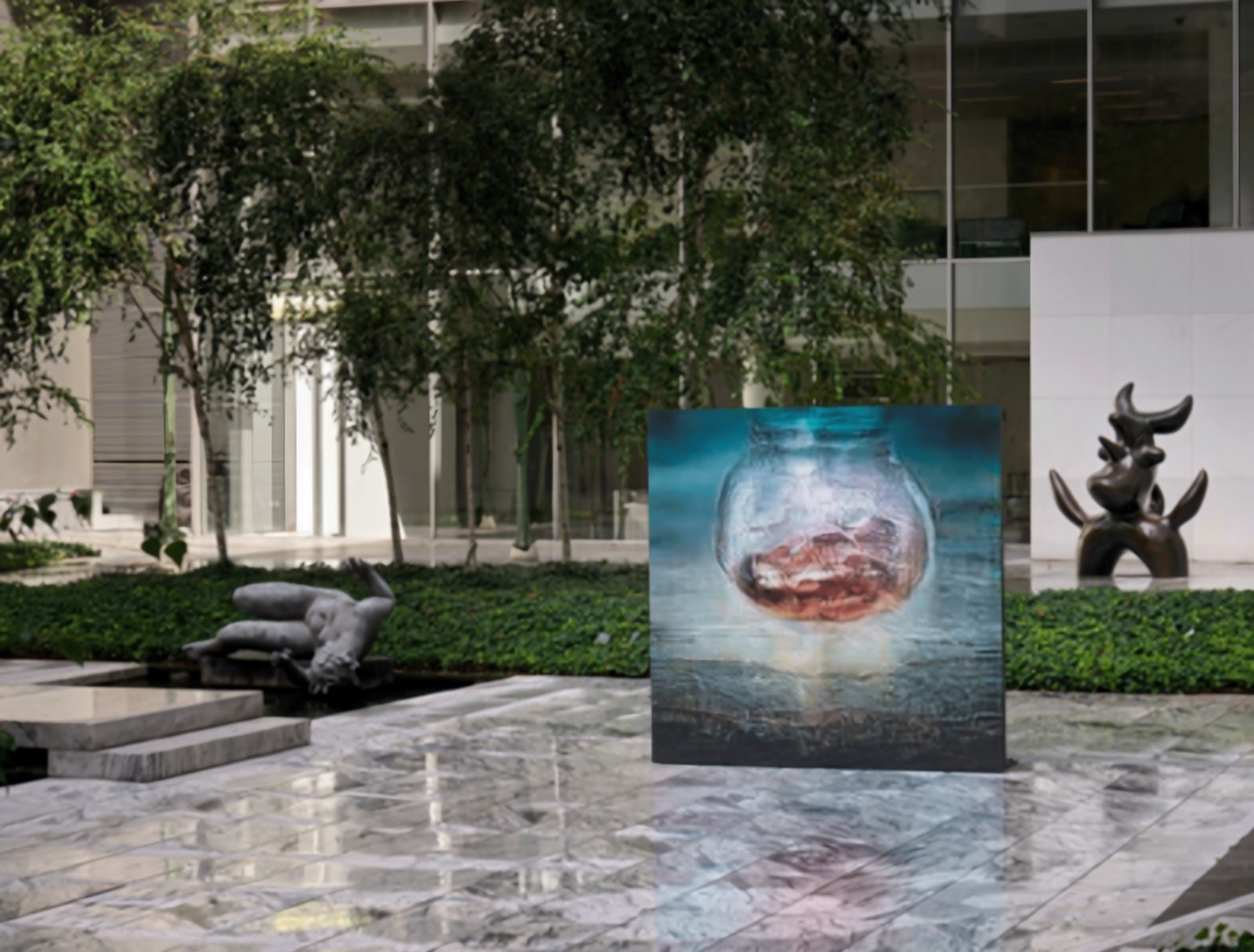
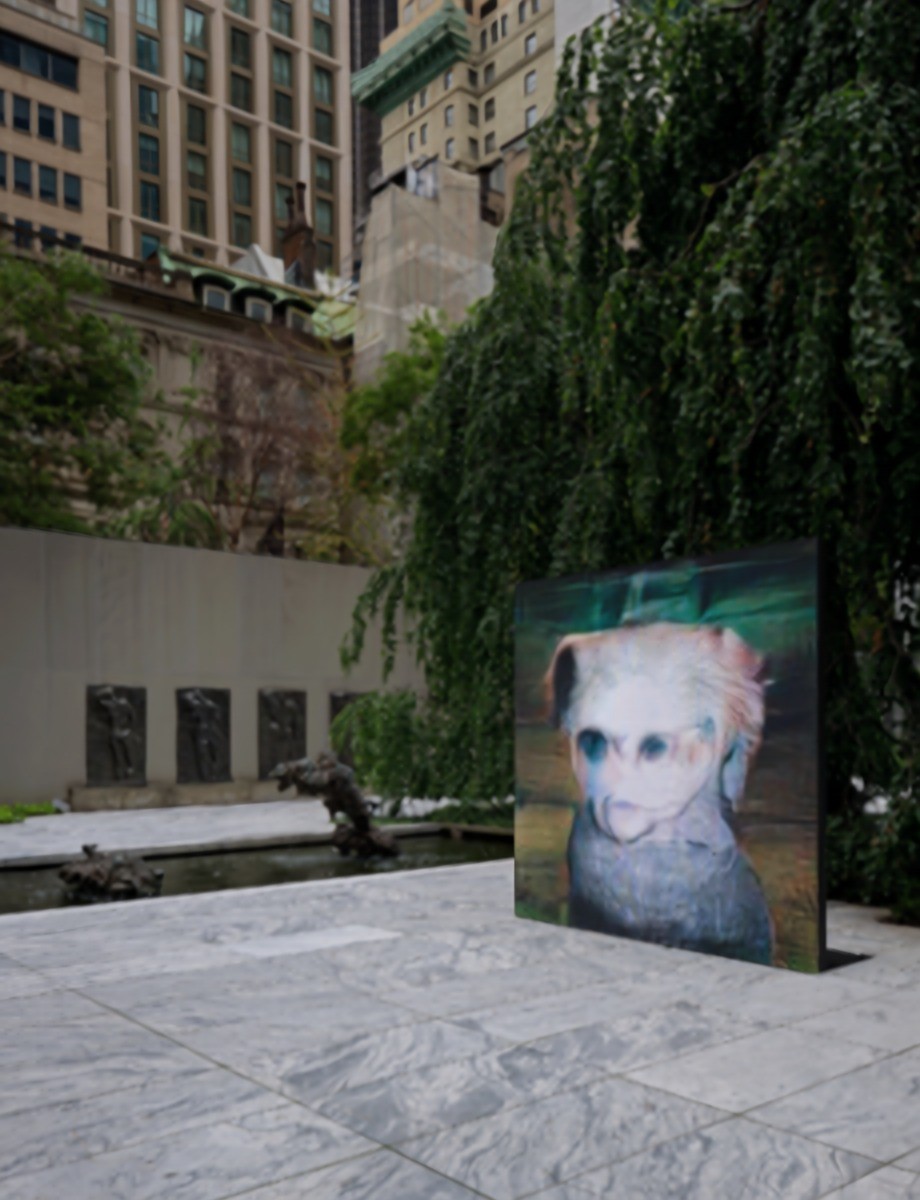
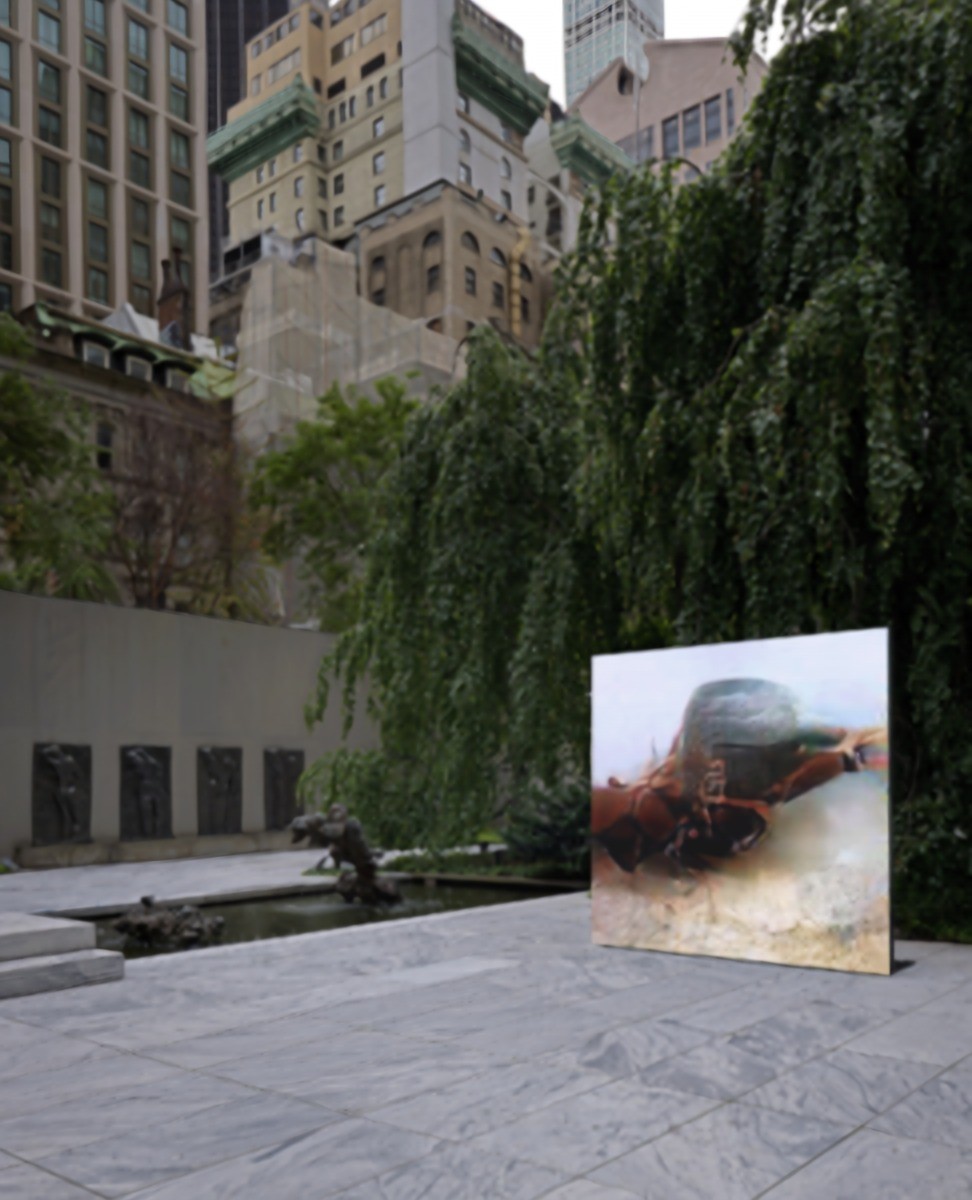
Imagination has always been the last private space. You can photograph a face, record a voice, track a location. What a person pictures in their head, eyes closed, has stayed theirs. Pierre Huyghe's UUmwelt walks straight through that wall, and does it in a sculpture garden.
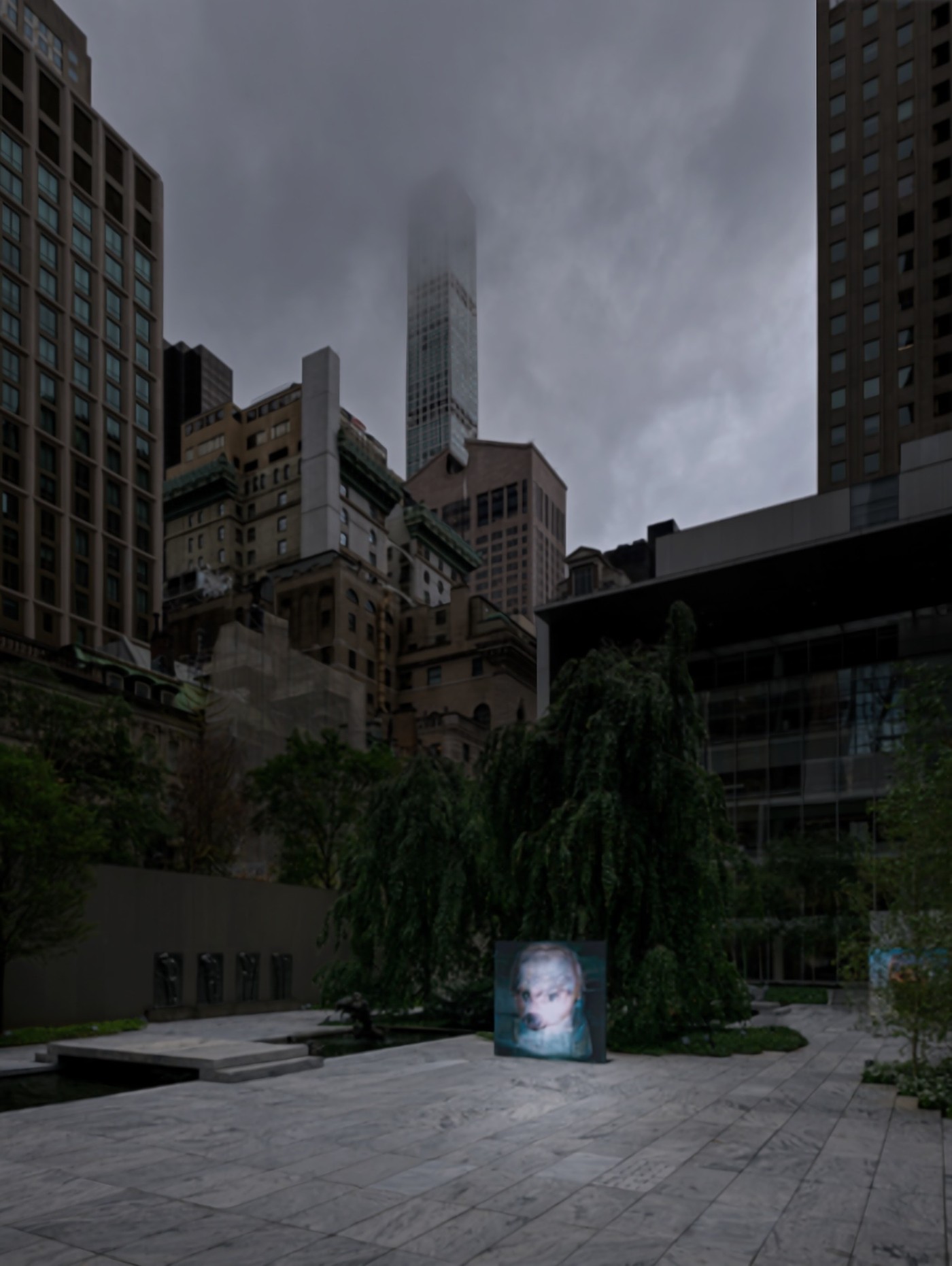
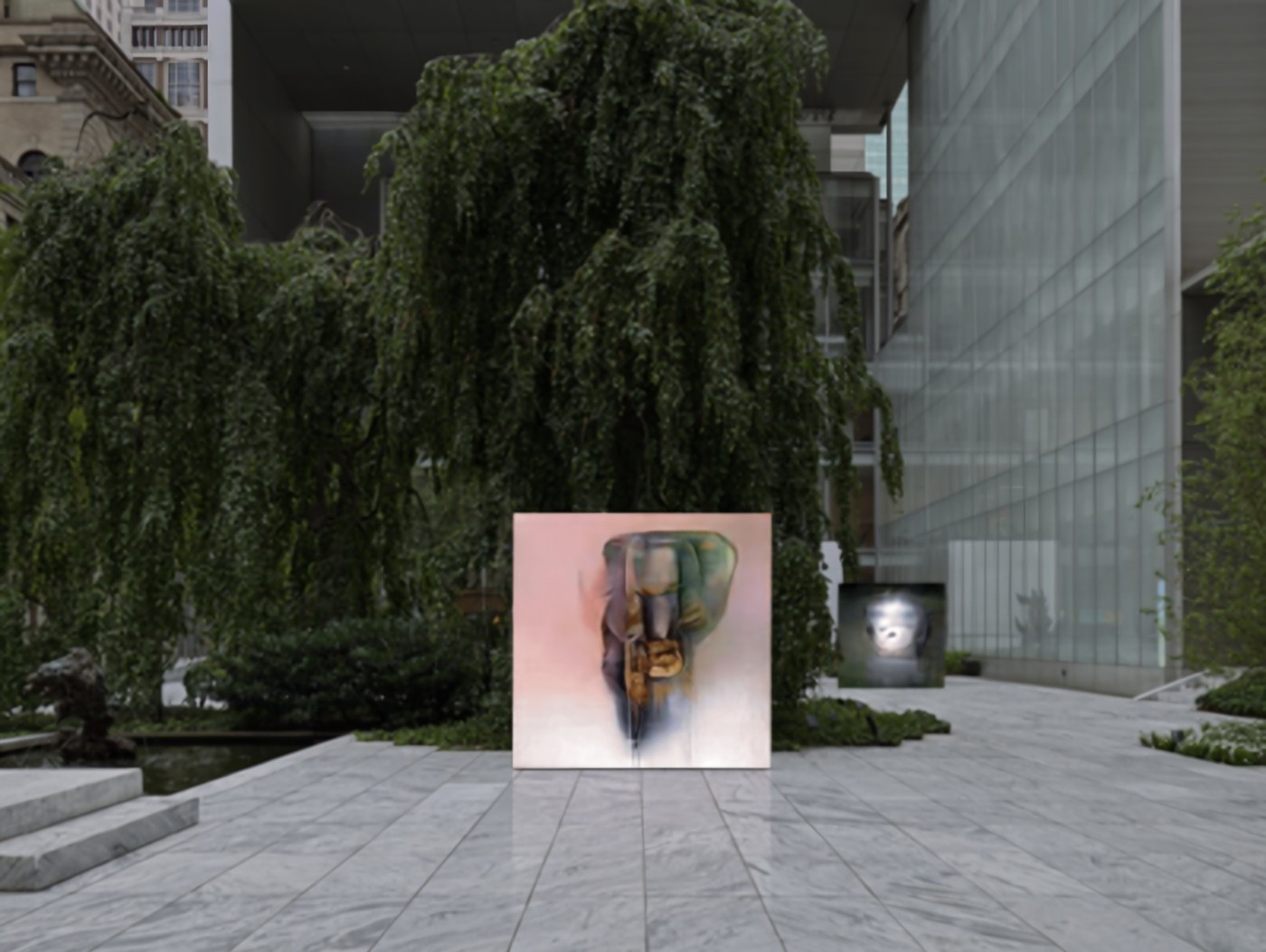
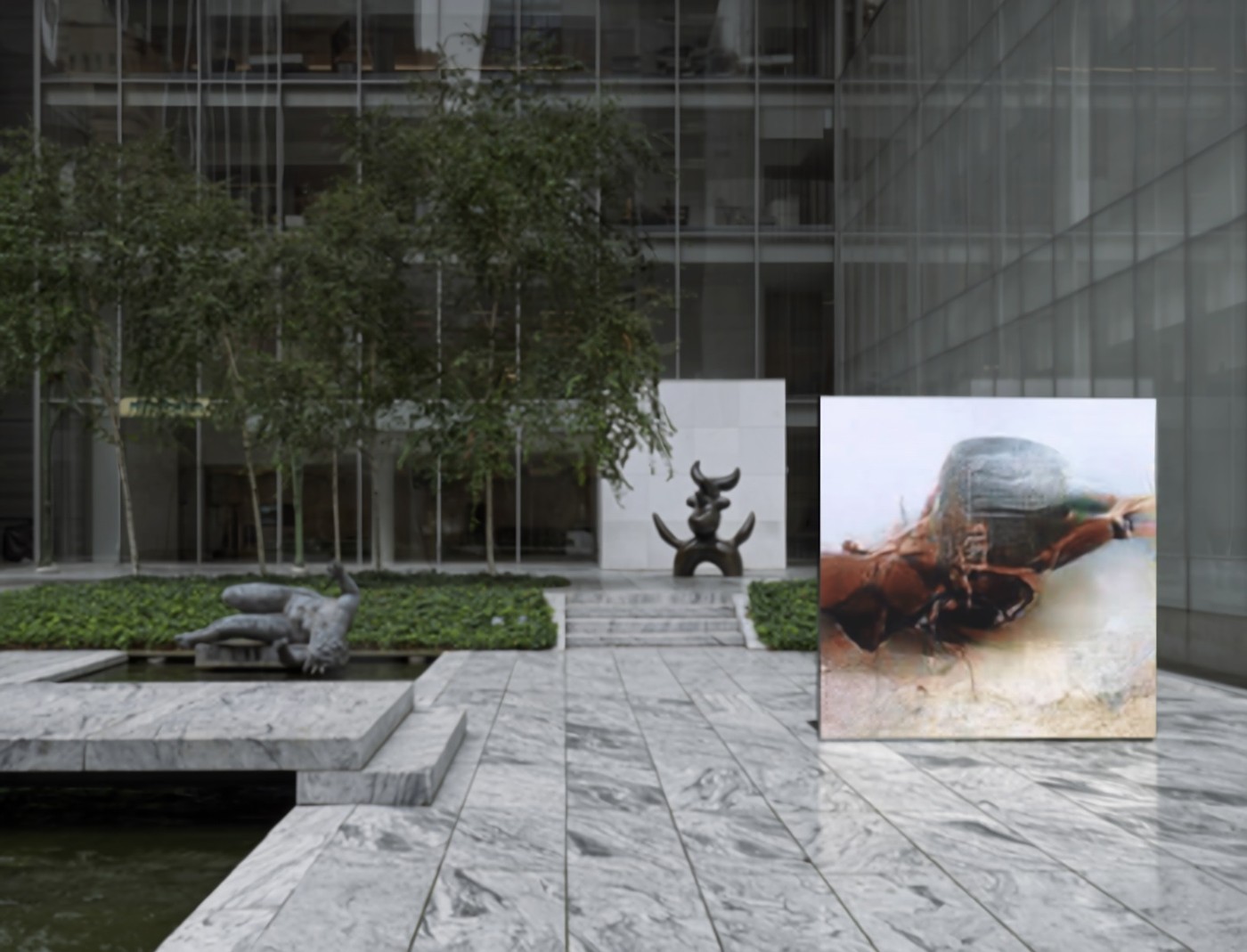
Presented on freestanding screens across MoMA's Abby Aldrich Rockefeller Sculpture Garden from July 1 to November 29, 2026, the work began in a lab. According to MoMA, Huyghe worked with neuroscientists in Kyoto: a human subject imagined a set of images while an fMRI scanner recorded their brain activity, and an artificial neural network then used that data to generate images. The scientific expertise is credited to Kamitani Lab / Kyoto University and ATR.
The results are not illustrations of thoughts. They are something stranger: machine attempts to reconstruct a mind's picture from blood flow and pattern-matching. Images that belong fully to neither the person nor the network. MoMA quotes Huyghe calling it 'a collective production of imagination between two kinds of intelligences.' That is the most precise description of the AI moment any artist has offered.
The title is a careful joke. Umwelt is a scientific term for the idea that every species perceives the world according to its own physical makeup — a tick's world is not a bat's world is not ours. Huyghe adds an extra U, which MoMA describes as proposing an unstable environment where the boundaries between human and machine cognition dissolve. One letter, and a theory of perception starts to wobble.
Placing the work outdoors matters. Screens in a garden sit among trees, weather, passers-by and the museum's permanent sculptures. Nature, bronze and neural networks share the same air. It makes the question harder to dodge: if perception is always shaped by the body doing the perceiving, what kind of body does a network have?
There is plenty of hype about AI 'seeing'. UUmwelt is more honest. Its images are blurry, provisional, constantly reworked — a reminder that both the machine and the brain are guessing. MoMA describes the work as dating from October 2018 and ongoing, which fits. It is less a finished object than a running experiment.
The unsettling part is not that a machine can approximate what someone imagined. It is how familiar the results feel — like dreams half-remembered on waking. Maybe imagination was never as private as we thought. Maybe it was just waiting for something else to look.