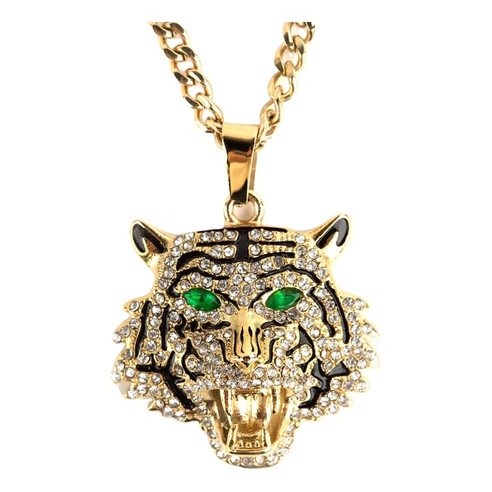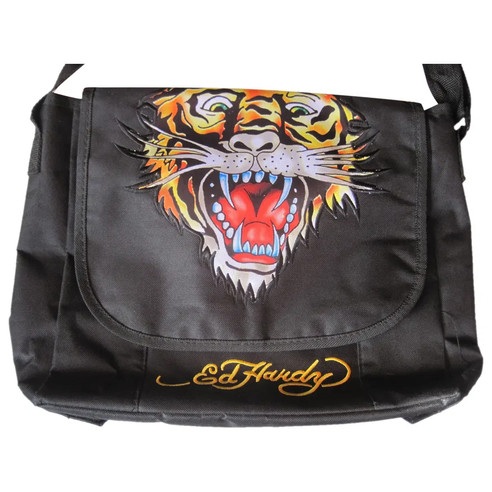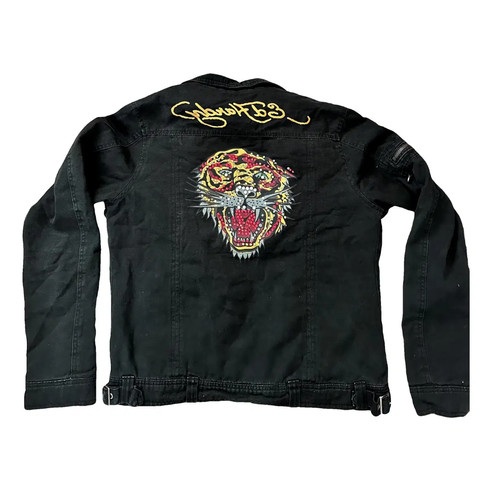

Ed Hardy does not ask to disappear into an outfit. Its tattoo imagery invites recognition, and its more embellished possibilities make the surface of clothing difficult to ignore. That is precisely why the label remains a useful subject for fashion analysis. The question is not whether everyone has suddenly returned to Y2K excess. It is why a visual language associated with conspicuous dressing can offer something productive to a wearer who has no interest in looking discreet.
Begin with the pieces, not the comeback claim
The brand’s current official denim catalogue includes Panther Long Denim Shorts, Japan Tiger Selvage Denim, Dragons Selvage Denim and Cobra Flames Selvage Denim. These listings establish a present product vocabulary. They do not establish when each piece first launched, how many units sold, or whether any individual design is now more popular than it used to be. A catalogue is evidence of an offering, not a referendum on public taste.
The Panther Cargo Jean is more specific. Ed Hardy describes a baggy cargo cut in retro light denim, archival panther artwork and an Old English logo at the back. Here, graphic imagery and silhouette work together. The garment is not simply a neutral pair of trousers with a small signature attached; the animal image and the lettering help define how it is read. The body becomes a moving arrangement of recognizable signs.

Tattoo imagery is not generic decoration
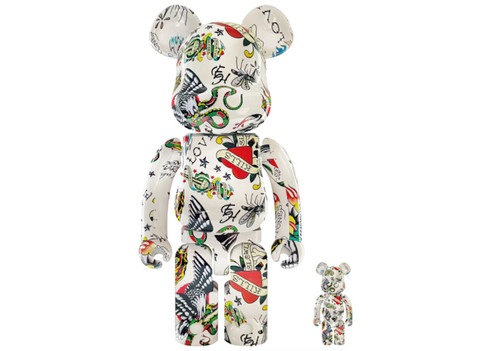
A panther, a tiger or a cobra can carry a stronger visual identity than an abstract seasonal print. The official product names keep those subjects visible rather than dissolving them into a general category of graphics. That distinction matters when discussing tattoo-print fashion. The image arrives with an identifiable subject and a compositional presence; it does not have to become anonymous texture just because it has moved onto denim.
The Panther Cargo Jean’s reference to archival artwork also needs careful handling. It supports the claim that this product uses an archive. It does not tell us the date of the original drawing, the circumstances of its creation or a single definitive meaning of the panther. Those would require additional documentation. A garment can be read for the force of its image without turning an interpretation into a factual account of the artist’s intent.
Excess is a styling choice
Rhinestones and embellished denim belong to the broader conversation around Y2K visual excess, but that conversation should not overwrite the specifications of a particular current product. Not every graphic jean is rhinestoned, and a printed animal is not evidence of hand embroidery. The official catalogue separately names embellished or embroidered pieces, including Leopard Panther Studded Micro Denim Shorts and Butterfly Skull Embroidered Denim Shorts. The differences are part of the appeal: shine, image and raised decoration do not produce the same effect.
For a contemporary styling approach, the productive choice is how much visual competition to introduce. A single graphic denim piece can carry an outfit; several emphatic surfaces can deliberately refuse hierarchy. Neither approach needs to be described as a rule. Maximalism becomes more interesting when it remains an active decision about emphasis rather than a demand to reproduce a complete historical look.

Nostalgia without impersonation
Celebrity culture encourages us to attach clothing to the most recognizable person who wore it. That can be a useful historical route into fashion, but it can also reduce a visual language to a costume associated with somebody else. No particular celebrity endorsement is necessary to understand the present pieces. Their images, cuts and surface treatments already provide material for a new wearer’s choices.
The same caution applies to nostalgia. Recognizing an earlier fashion mood does not mean repeating every part of it, and choosing an emphatic graphic does not demonstrate allegiance to an entire decade. Ed Hardy is worth discussing where it makes that freedom visible. The current official products support an analysis of tattoo imagery, denim and deliberate excess. Claims of a universal revival, surging sales or a newly converted generation would require evidence the clothes themselves cannot provide.