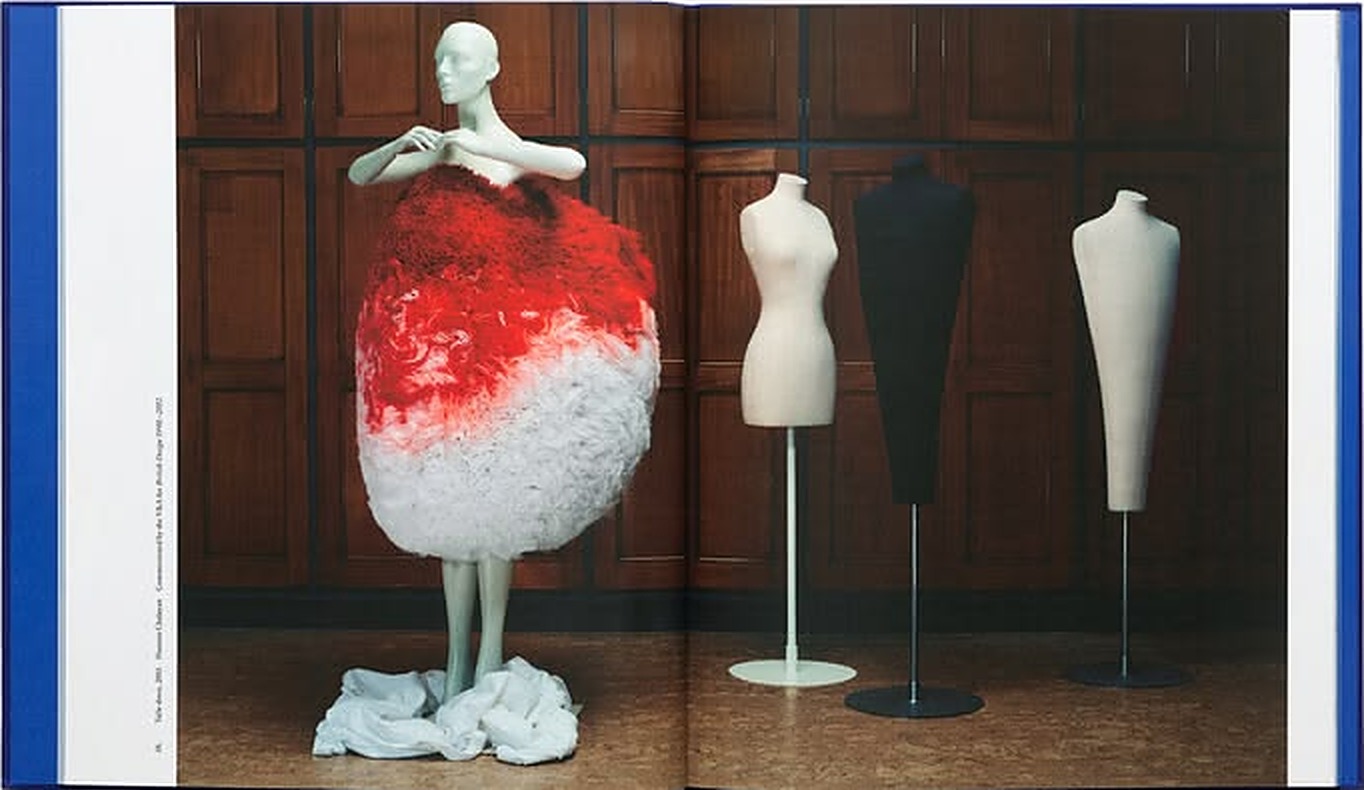
Denim is persuasive because it rarely needs explaining. We recognize the shirt, the jeans and the practical promise before we inspect the construction. Acne Studios’ collaboration with Hussein Chalayan works against that instant recognition. Its patchworked and asymmetrical pieces keep familiar categories in view while making their boundaries less secure. The result invites a second look rather than delivering the reassurance of another archive logo on another familiar garment.
Ordinary material, unsettled structure
Acne Studios describes the collaboration as an exploration of transformation, regeneration and experimental construction, tied to thirty years of its denim heritage. That framing matters because it places the experiment inside an established material language. Denim is not simply a backdrop for a conceptual idea. It is the recognizable substance against which the changes become legible. You need to know what a conventional pair of jeans looks like to appreciate the decision to make it behave differently.
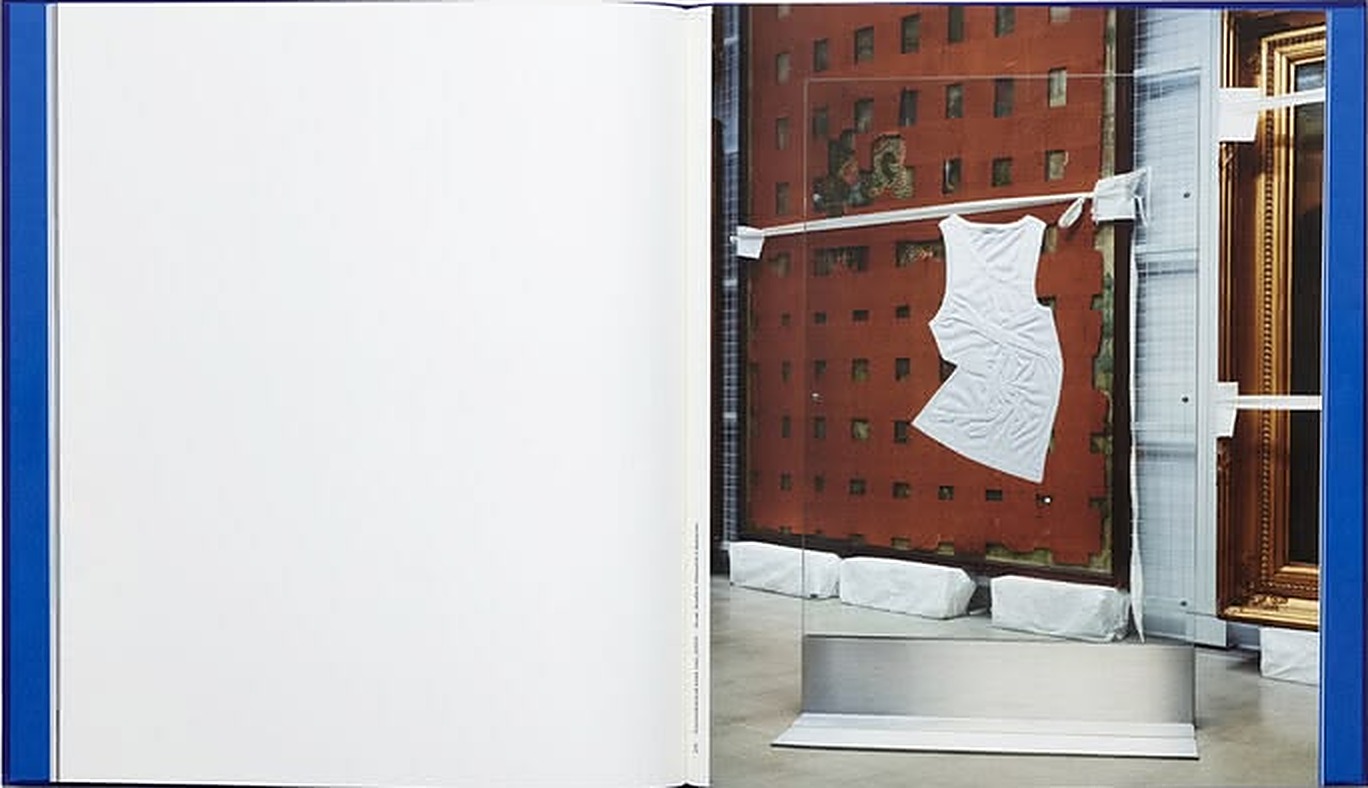
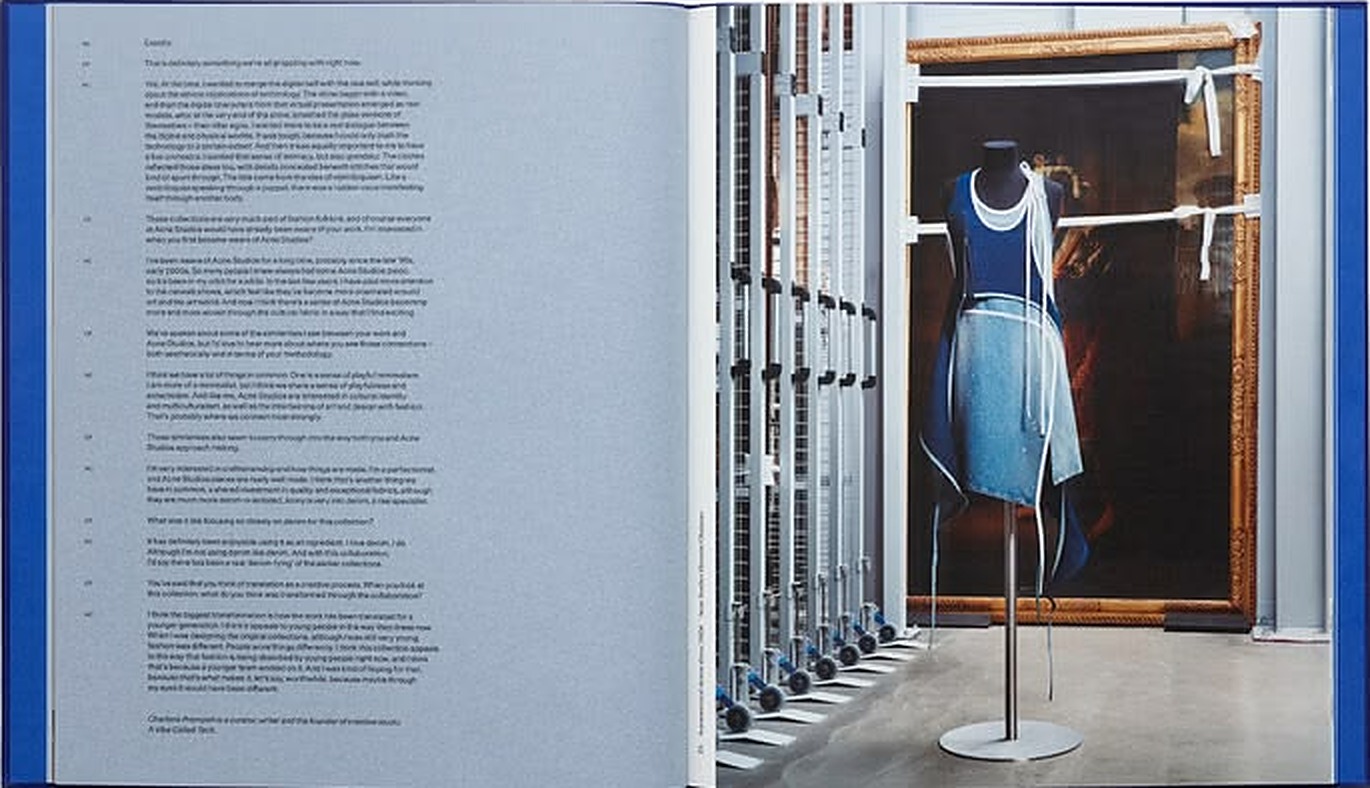
The official selection includes Patchwork 1996 Jeans, Patchwork Jeans–2009F and a Patchwork Denim Shirt. Alongside those are an Asymmetrical Denim Vest and an Asymmetrical Denim Mini Dress. These names establish two distinct operations: assembling a surface from parts and interrupting the expected balance of a garment. Neither requires us to invent a theatrical function. The interest is already in how the clothing asks a familiar wardrobe to accommodate disruption.
Patchwork carries a particular visual charge here. A garment can remain recognizable at a distance while refusing the smooth continuity expected of a single surface. That tension offers a useful way to think about archive reinterpretation: not as the recovery of an untouched original, but as a process in which different pieces of a design language become available for rearrangement. It is a reading of the construction, not a claim that every panel comes from an old garment.
A bag that refuses its first impression
The Camero provides the clearest material joke. Acne Studios identifies its new version as trompe-l’œil patchworked denim leather. The object therefore presents a denim proposition through another material. The deception is not incidental decoration; it makes the act of recognizing the material part of the design. Before deciding whether the bag feels familiar, the viewer has to decide what that familiarity is made from.
The broader selection also includes a Layered Cotton Mini Dress, an Asymmetrical Tank Top and twisted python-print jeans. Those official descriptions give the collaboration more than one route away from normality. Layering, imbalance and printed illusion do different jobs. Treating them all as generalized weirdness would flatten the collection’s more interesting question: how much can a garment change before the everyday category supporting it begins to loosen?
The archive is present, not frozen
The collection was photographed at London’s V&A East Storehouse, according to Acne Studios, which notes that selected garments from Chalayan’s archive are preserved in its permanent collection. That is a specific relationship between setting and designer. It does not mean the collaboration itself has been acquired by the museum, nor that the new pieces are replicas of particular archived looks. The distinction keeps the institutional context useful rather than turning it into borrowed prestige.
Acne Studios also presents Reference: Hussein Chalayan, a limited-edition book editorially directed by Charlene Prempeh. Its presence alongside the clothes suggests another mode of engaging with a designer’s work: looking and reading, not only shopping. An archive can supply questions as well as silhouettes.
For contemporary street styling, the strongest implication is freedom from the obligation to resolve everything into a coherent uniform. A recognizable denim piece can carry an unresolved construction; a practical bag can make its own material identity ambiguous. The collaboration is compelling where recognition and uncertainty coexist. Fashion does not have to abandon ordinary clothing to become experimental. Sometimes it only has to make the ordinary harder to take for granted.