A blank canvas can look less like freedom than a demand: make something, choose something, get it right. Fiona Huang has a practical response. As Richmond Art Gallery's exhibition text explains, she often covers the surface with a dark colour before introducing brighter, sometimes neon forms. The first move breaks the deadlock. What follows develops through adjustment, with figures and other elements emerging as she paints.
That process gives Free in the Chaos a more specific meaning than its title initially suggests. Chaos is not simply an aesthetic of noise. It is permission to begin without having the whole image settled. Presented by Richmond Art Gallery at its off-site Annex Gallery, the exhibition brings together paintings and mixed-media works by an artist identified in the gallery's biography as a 14-year-old Chinese-Canadian teenager.
A visual world without clean borders
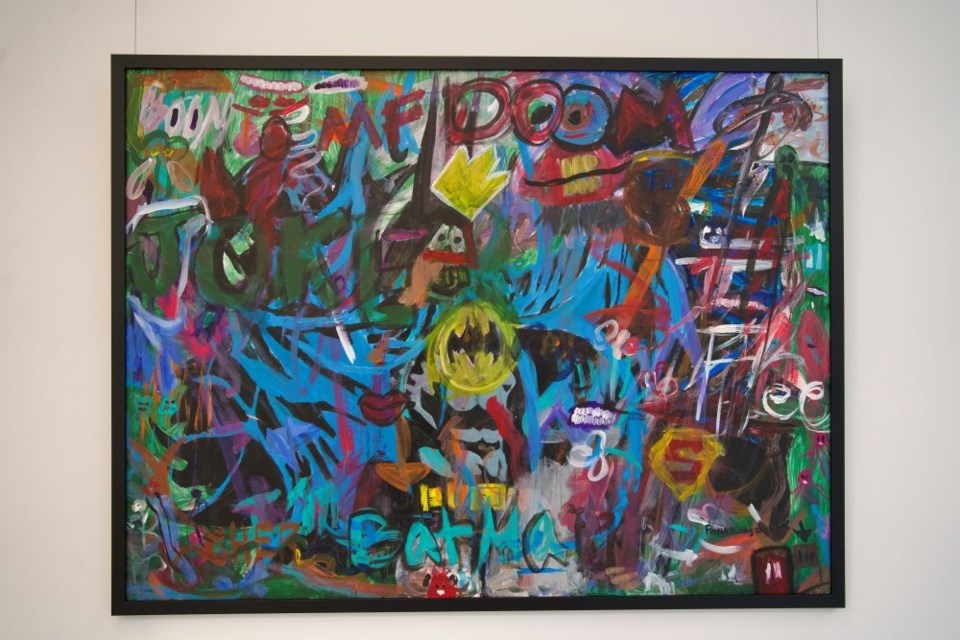
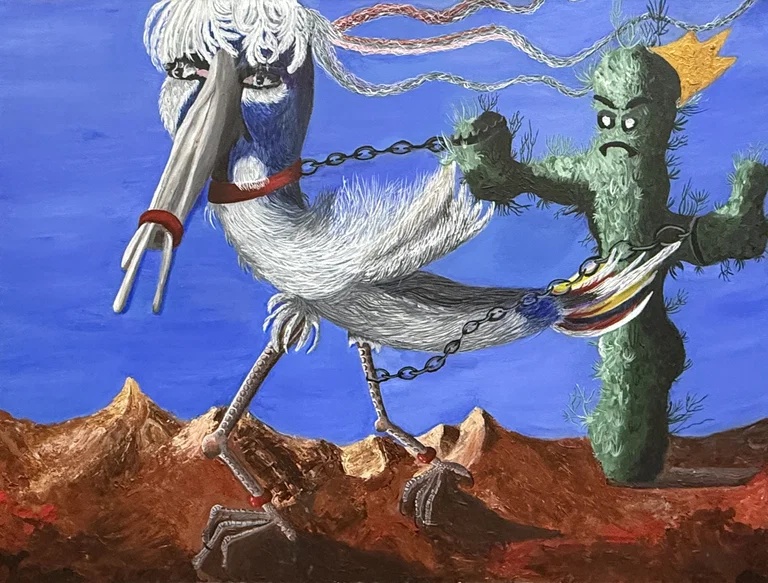
Huang draws on graffiti, street art and popular culture. The gallery describes compositions that combine gestural painting, text and imagery, moving between recognisable figures and abstraction. Characters from comics, cartoons and games appear alongside monsters she invents. Rather than keeping these sources in separate compartments, her paintings make them share a surface.
There is something pointed about that refusal of separation. Popular images are often treated as material young artists should eventually outgrow, exchanged for supposedly more serious references. Here, they are part of the working vocabulary. Comic books and hip-hop, both named in Huang's biography as important interests, belong to the same creative field as paint and found objects.
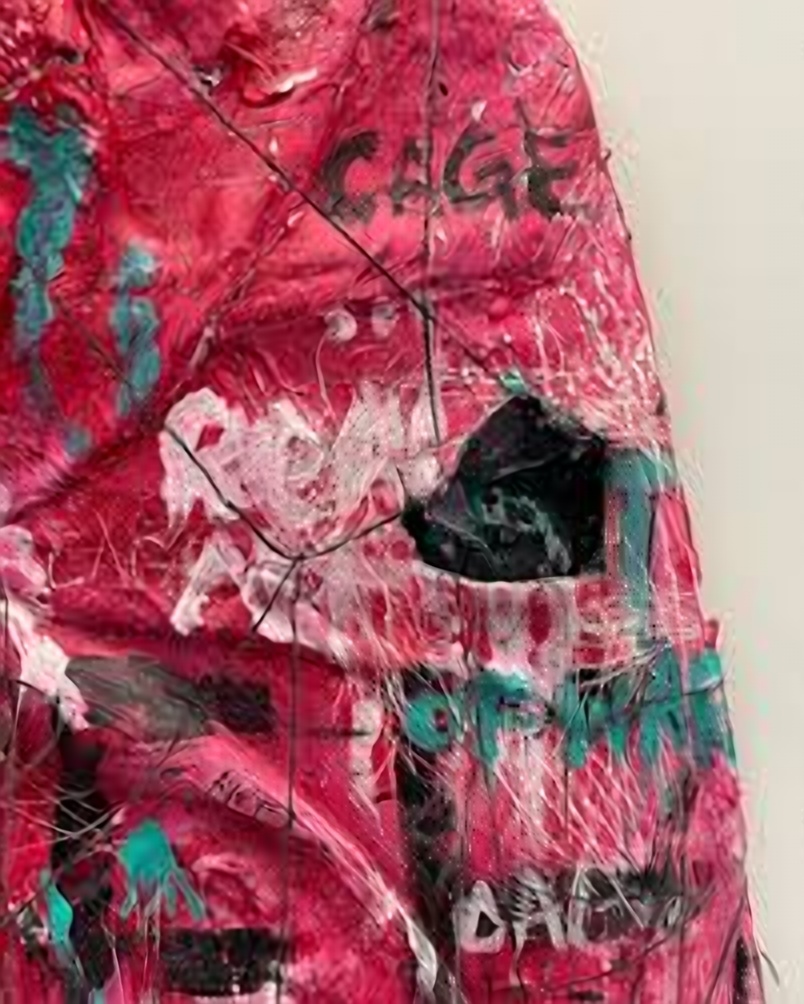
Jean-Michel Basquiat is an acknowledged influence. The useful connection is not a claim of equivalence, but an interest in the traffic between words, figures and painted marks. Huang incorporates phrases that inspire her within compositions that resist a single visual register. Writing can be read, but it can also interrupt, accumulate and occupy space.
Clothes become a working surface
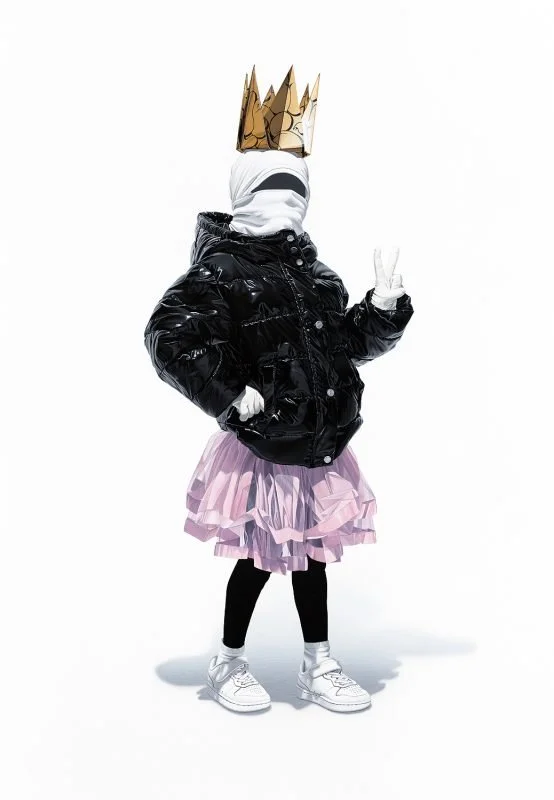
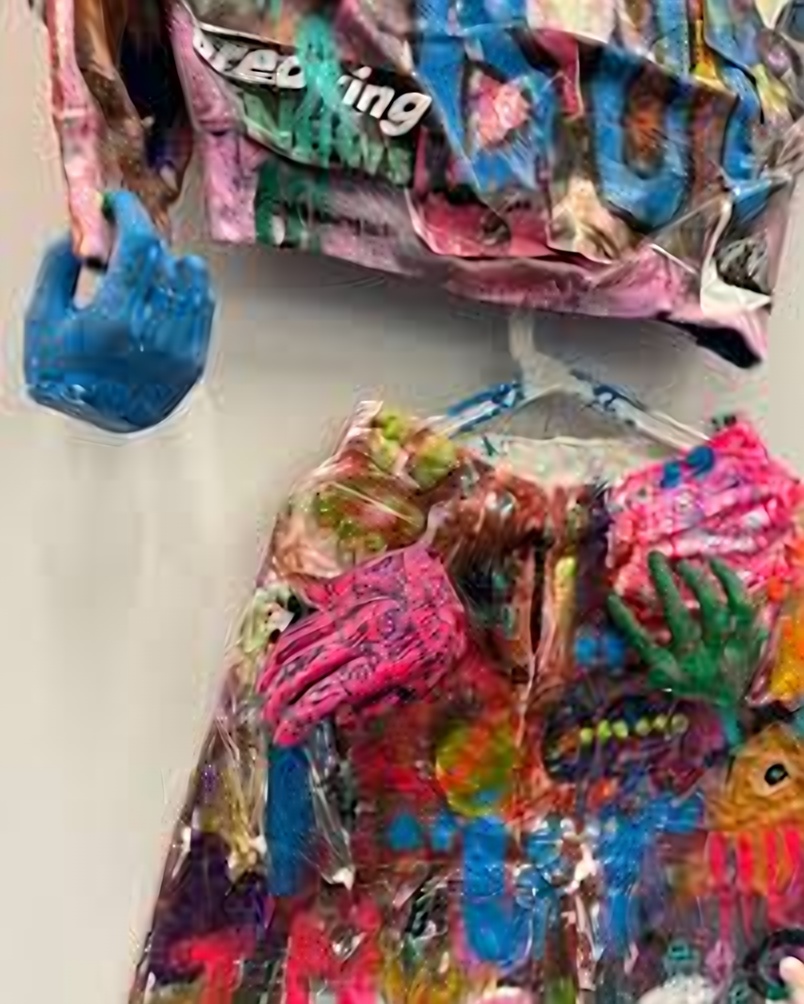
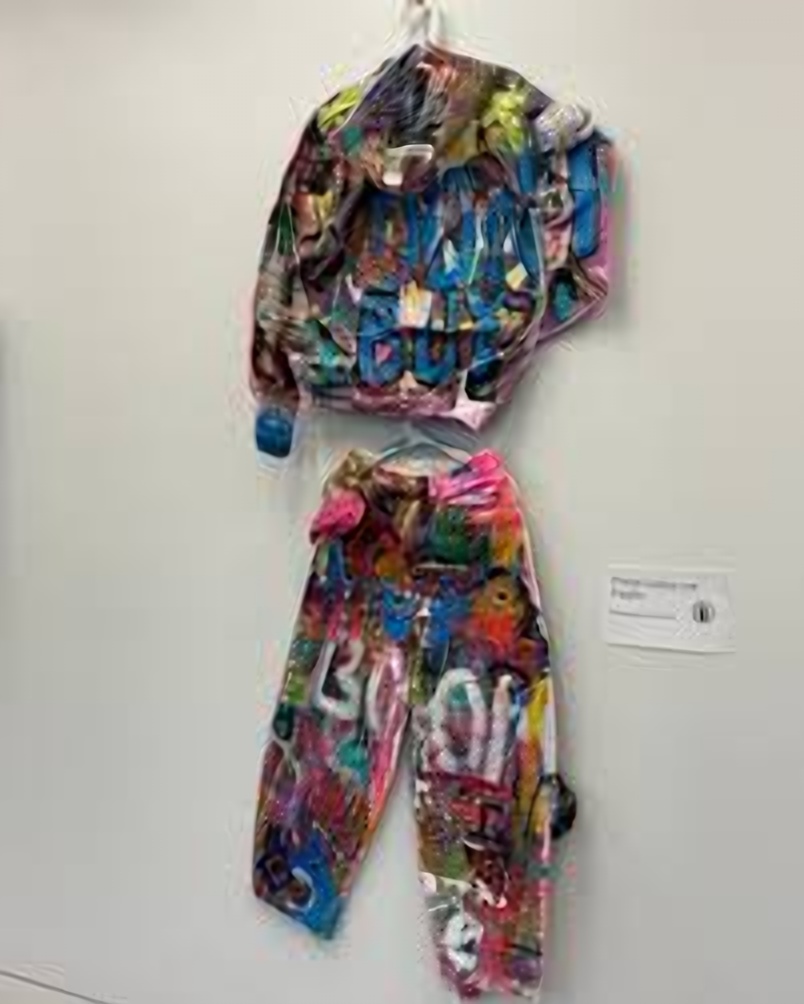
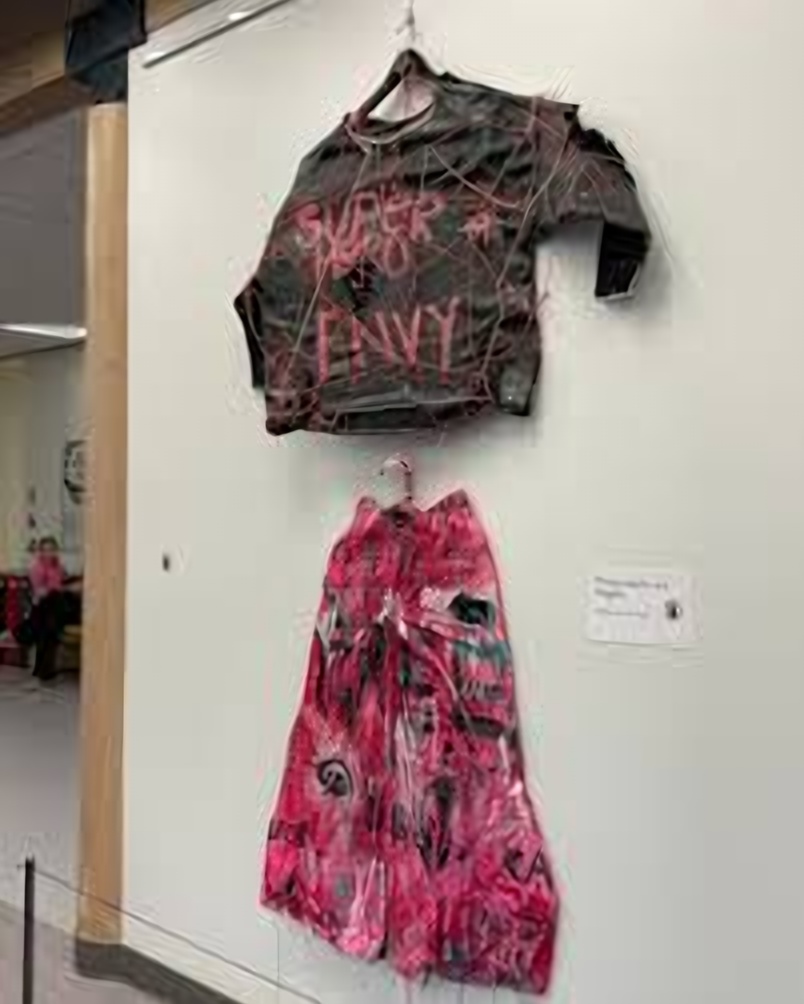
The exhibition's illustrated work, Chanucci's Effect (2025), expands that activity beyond a conventional canvas. Its credited materials are thrifted clothing, acrylic paint, clay and plaster; its dimensions are 81 by 27 inches. Clothing arrives with a prior relationship to bodies, use and consumption. Painting and building onto it makes an already circulating object available for another purpose.
The gallery identifies consumer culture, social expectations and individuality among Huang's concerns. Chanucci's Effect provides a material foothold for thinking about that combination. An item associated with getting dressed can become something to construct upon. What usually helps someone fit into a social world can instead become the basis for making a different one.
That is not the same as declaring every found material an act of resistance. The more interesting question is what Huang permits herself to do with it. Her process makes room for alteration rather than demanding fidelity to an object's original function. Play is one way of testing which rules actually need to survive.
Freedom is not the absence of support
Huang takes classes at BC Creative Center, the Richmond creative education studio that mentored the development of this body of work. That context complicates the familiar fantasy of youthful expression as entirely unmediated instinct. Experimentation can be supported. A young artist can receive guidance without having every decision resolved in advance.
The strongest proposition here is not that youth automatically produces authenticity. It is that an emerging practice deserves attention before it has been tidied into a signature style. Huang's movement between painting, borrowed characters, invented creatures and altered materials suggests a vocabulary still being tested. Freedom is not a finished look; it is room to keep changing the terms.
Free in the Chaos runs at The Annex Gallery, Richmond Cultural Centre Annex, 7660 Minoru Gate.