
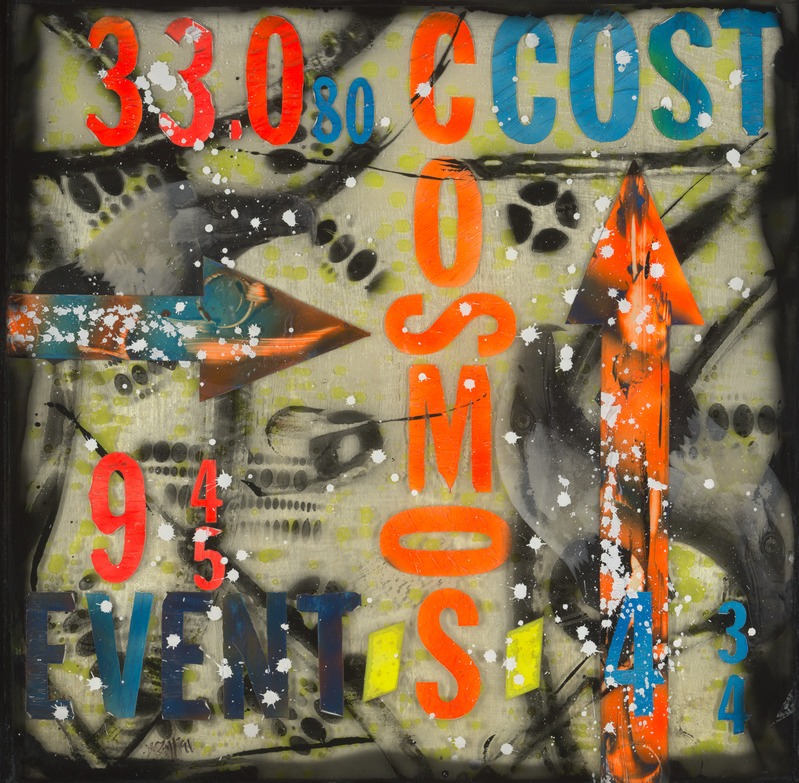
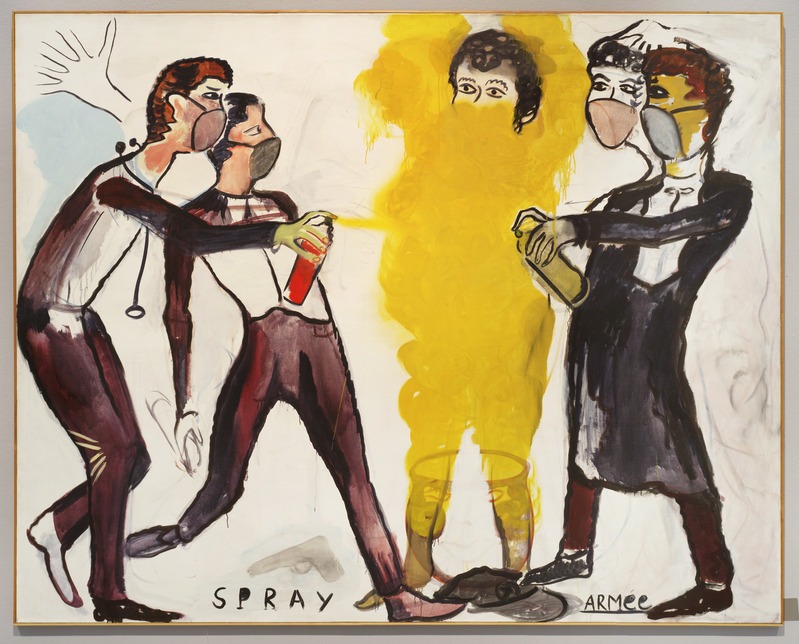
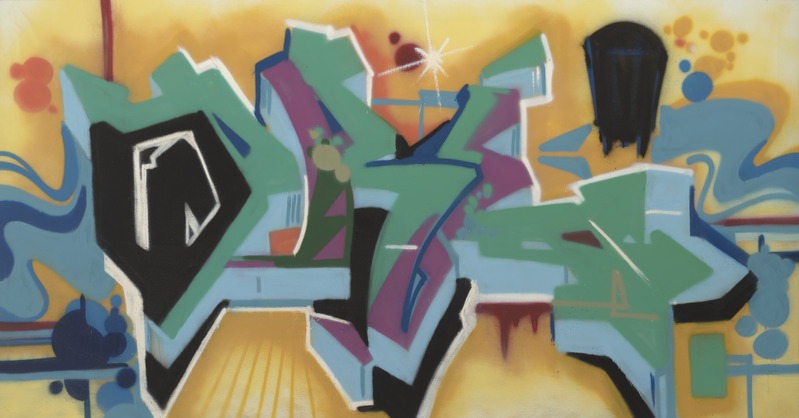
The least interesting defence of graffiti is that some of it looks good enough to enter a museum. That argument leaves the museum in charge of the verdict and turns an unruly field of practice into an audition. Graffiti, at Centraal Museum in Utrecht, proposes something more useful: graffiti and contemporary art have influenced one another for decades. Neither needs to appear as the other's grateful discovery.
Presented in De Stallen, the museum's former convent stables, the exhibition brings together more than 120 works across over 1,000 square metres. Its stated seventy-year span complicates the familiar sequence in which New York graffiti emerges, attracts attention and eventually receives institutional approval. Here, spray techniques, urban objects, abstraction, moving images and train culture create less orderly connections. The question becomes not simply who gets called an artist, but which histories make that designation possible.
A spray can is not a single history
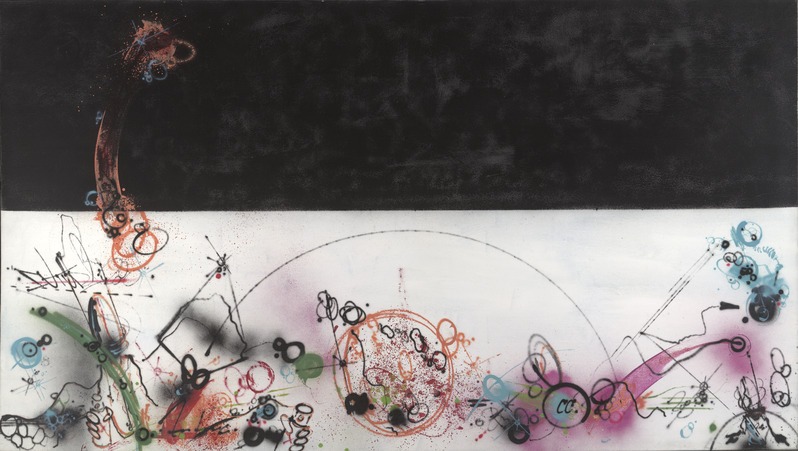
Dan Christensen's O provides one of the exhibition's useful disruptions. The museum identifies it as an exploration of spray painting made before graffiti's rise. That does not make Christensen the origin of graffiti. It separates a tool from the social practices that gather around it. Similar equipment can serve different intentions, audiences and systems of recognition.
The same resistance to easy classification appears in Klara Lidén's readymade trash cans and electrical cabinets. These objects bring the infrastructure of urban space into an exhibition about marks on that space. Josephine Pryde's New Media Express, meanwhile, is a moving model train carrying miniature graffiti that visitors can ride. Scale and use become part of the argument: a railway reference is no longer only something to look at, but a structure that carries a body.
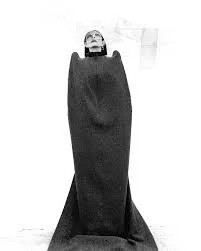
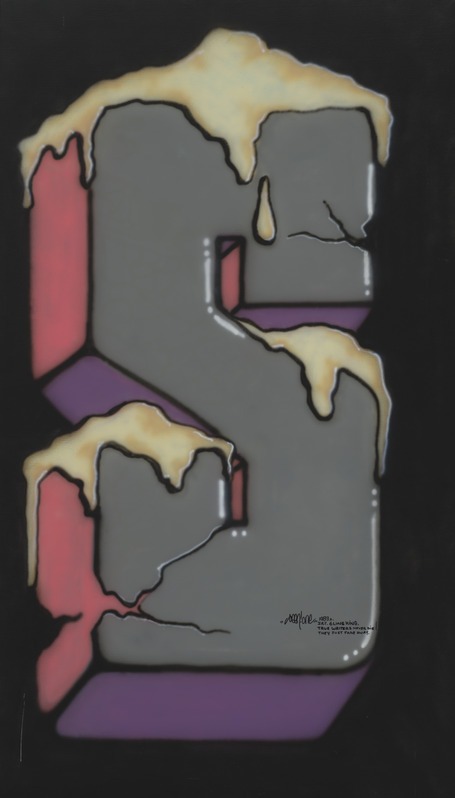
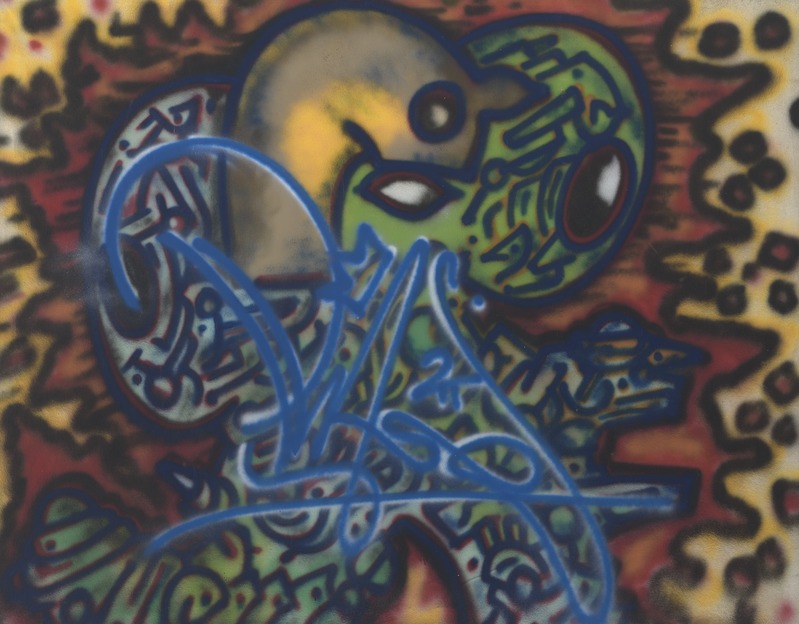
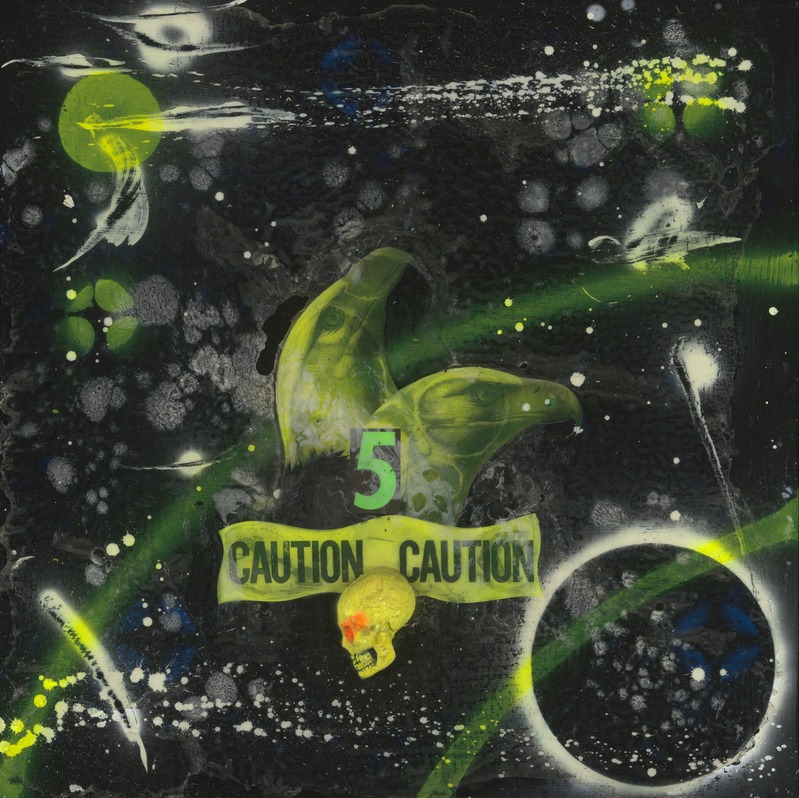
The verified artist list includes Blade, Daze, FUTURA 2000, PHASE 2, Lee Quiñones, Dondi White, Rammellzee and Seen, alongside figures including Chantal Akerman, Melvin Edwards, Yayoi Kusama and Lawrence Weiner. This is not evidence that their practices are equivalent. It is an invitation to examine what becomes visible when they share an exhibition, without flattening their different relationships to the street.
Utrecht is not an appendix
The local material is particularly important. A design sketch by Michel Vos, known as Rhone, connects the exhibition to Utrecht's train-writing history. Henny Overbeek's The Books Happen project introduces a changing installation: visitors can respond to a starting collage and contribute to its accumulating layers. Creative Lab Utrecht supplies a miniature Utrecht landscape with hand-painted model trains, as well as participating in the public programme.
These contributions prevent the city from functioning merely as a receiving station for a New York origin story. They also offer different forms of participation. Looking at a historical sketch, adding to a collage and recognising a model city are not the same activity. The exhibition's strength on paper is its willingness to place those encounters together rather than insist that one experience defines graffiti.
Two smaller presentations extend the Dutch history. The Dutch Graffiti Library's VHS installation uses footage from the early 1990s. Rammellzee in the Netherlands, curated by Aileen Middel, also known as Mick La Rock, combines documentary material with drawings Rammellzee made for Utrecht's outdoor exhibition Nachtregels.
The museum is part of the question
Curated by Catrien Schreuder, Leonie Radine and Ned Vena, the exhibition is a collaboration with Museion in Bolzano/Bozen, where the initiative originated. Its institutional framework does not resolve the tensions it describes. A museum can broaden the record while still determining what receives space, interpretation and permanence.
That is why the title's apparent simplicity is useful. Graffiti names something whose boundaries the exhibition immediately unsettles. Rather than asking visitors to applaud its promotion into art, the stronger proposition is to examine the machinery of that promotion. Who gets preserved? Who supplies the context? And what changes when a practice associated with claiming space becomes a subject through which a museum examines its own?