A personal detail can explain a design more convincingly than a page of collaboration language. For VANSZA, SZA’s starting point is the habit of stepping on the backs of her shoes. In Vans’ official account, she explains her preference for mules and slide-ons, and her decision to build that preference into the footwear. The resulting VANSZA Authentic Kickdown and Knu Skool Mule make personal use a design instruction rather than a campaign anecdote.
Start with the way the shoe is worn
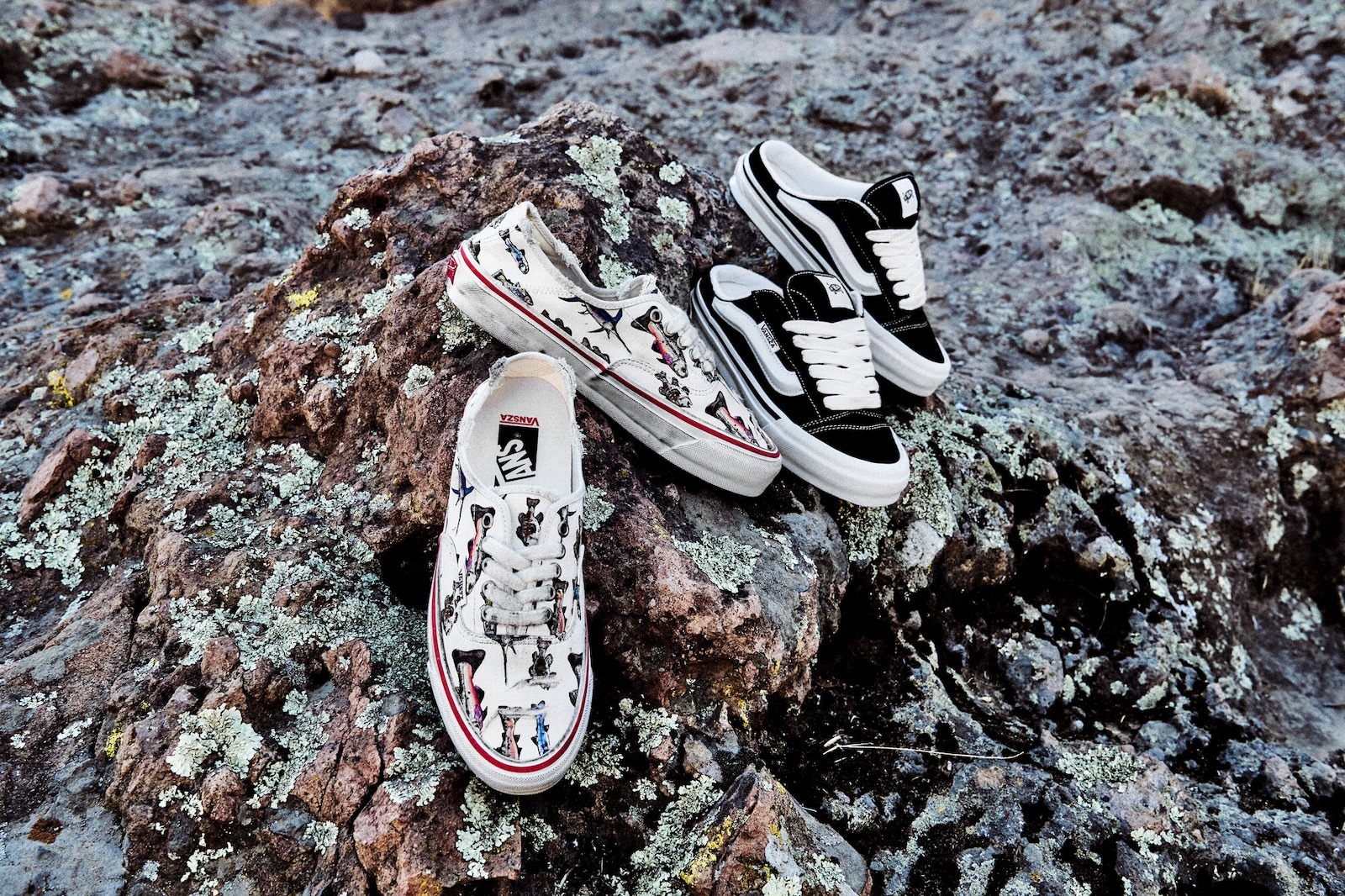
The two silhouettes approach easy entry differently. The Authentic Kickdown retains a heel that can collapse; the Knu Skool Mule removes the back. That distinction is the collection’s clearest expression of authorship. SZA is not simply lending an image to an unchanged sneaker. An everyday gesture becomes something the object is designed to accommodate, instead of something its wearer is supposed to stop doing.
That is also a useful way to discuss comfort without slipping into unsupported performance promises. A backless silhouette and a collapsible heel describe how someone can enter and wear a shoe. They do not prove that the design will suit every foot or every activity. The persuasive idea is choice: the collaboration accepts a less formal relationship between wearer and footwear rather than insisting that the shoe must always be used in one correct way.
Artwork needs an author
The official Authentic product page credits Sage Adams’ custom watercolor artwork, alongside distressed canvas and the collapsible heel. That credit should remain attached to the shoe. Calling every visual decision an expression of SZA alone would erase the collaborative practice that gives the release its particular surface. Creative direction and the making of an image can belong to different people without weakening either contribution.
Watercolor and distressed canvas also propose a different mood from the hard-edged technical language often used to sell a new sneaker. The design can be approached through texture, image and personal association instead of a catalogue of purported upgrades. The official material description is enough to support that reading; it does not require an invented account of where Adams painted the work or what each mark symbolizes.
A world with named collaborators
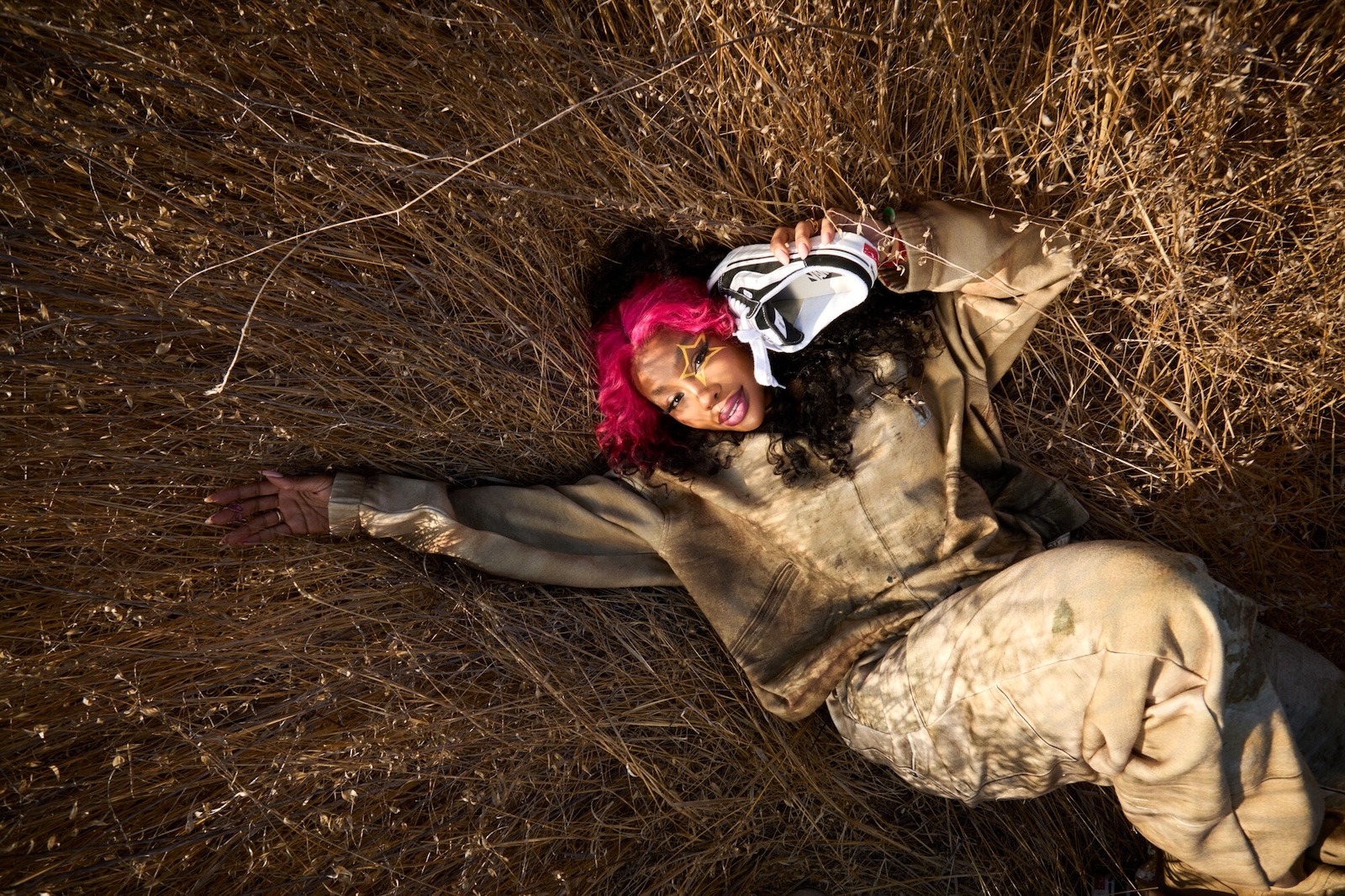
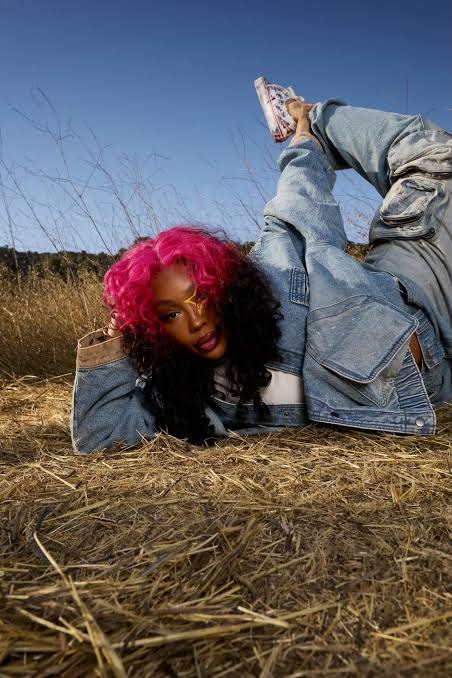
Vans frames Drop 1 as a footwear and apparel collection informed by nature and SZA’s personal perspective. Its campaign was photographed by India Sleem against California’s natural landscape, with product and landscape imagery by Yudo Kurita. Those are separate credits, not interchangeable names for one body of photographs. Any eventual image selection needs to preserve the distinction between campaign portraiture and the other commissioned imagery.
The announced cast includes Vans Skate Team rider Zion Wright, models Caylee Blosenski and Isabella Carr, and musician Vans. Naming those participants makes the creative world more concrete. It is not necessary to inflate the campaign into an undocumented movement or claim that every person in it shares a single philosophy. The photographs are a produced encounter among specific collaborators, not neutral proof of how an entire audience dresses.

Self-expression without a compulsory uniform
The strongest reading of VANSZA is that personal style can begin with permission to use a familiar object differently. The mule and the Kickdown retain recognizable Vans references while changing the behavior expected of the wearer. That approach leaves room for self-expression without demanding that the audience purchase and reproduce an entire head-to-toe identity. A small practical preference can carry a substantial visual difference.
The October 15, 2026 announcement specifies selected-store releases on October 17 and October 21, followed by online release on October 22. Those dates belong to Drop 1. They should not be used as a substitute for checking current regional availability or as evidence that later VANSZA pieces were already released. The collection’s identity is clearest when the credits, shoe constructions and release boundaries stay intact. SZA’s point of view does not need exaggeration. It is already present in the choice to make the back of a shoe optional.