
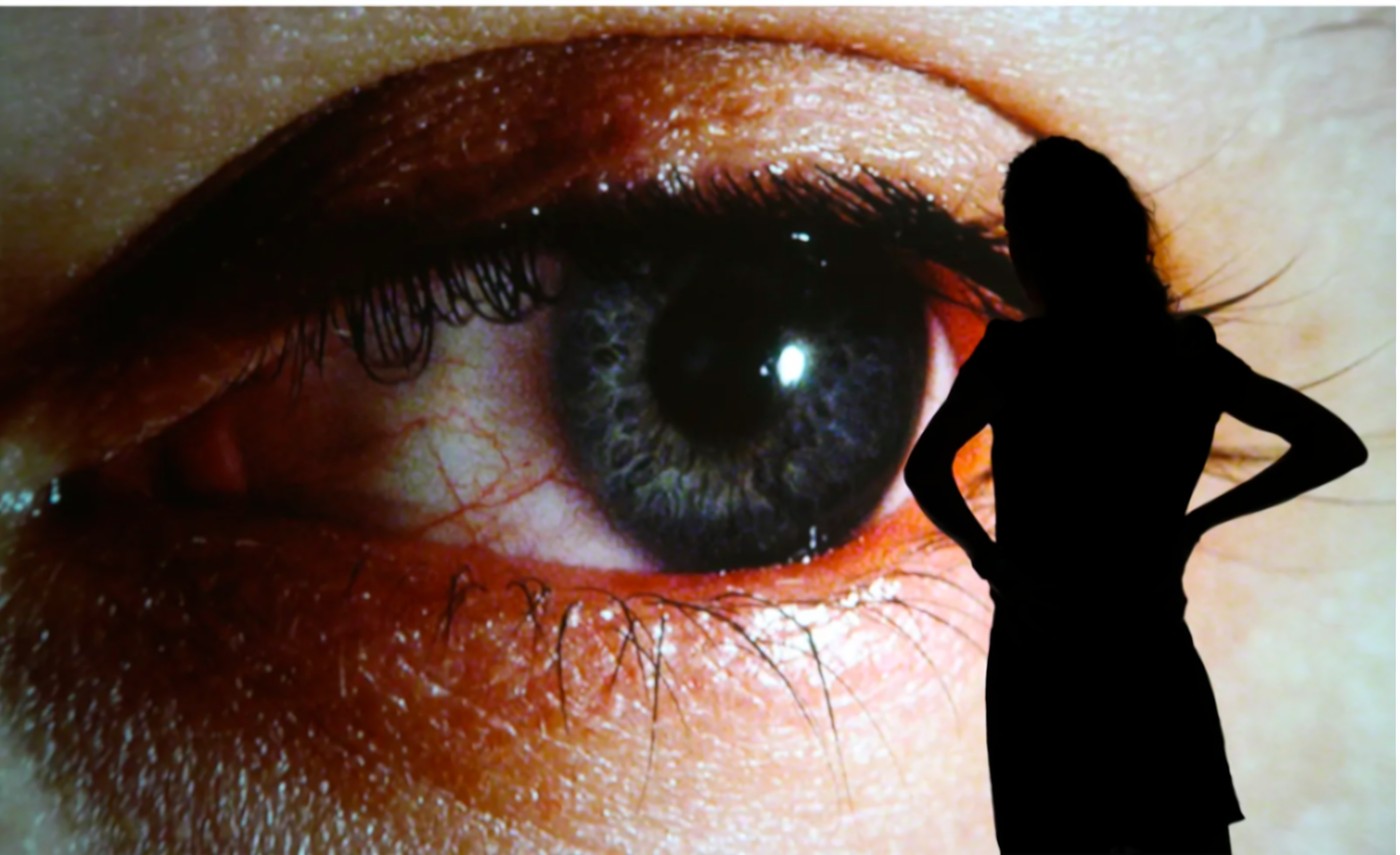
In 1992, Rafael Lozano-Hemmer made a giant human eye that follows visitors around a room. At the time, it was a strange, slightly comic idea. Three decades later, cameras that track us are so ordinary we have stopped noticing them. Look Alive, at the Georgetown University Art Galleries, brings that early eye back and asks us to notice again.
The exhibition spans the Maria & Alberto de la Cruz Art Gallery and the Lucille M. & Richard F. X. Spagnuolo Gallery, gathering works from more than thirty years of the Mexican-Canadian artist's practice on presence, participation, machine vision and the act of looking. Its centrepiece is the premiere of Pulse Map, the newest work in his Pulse series.
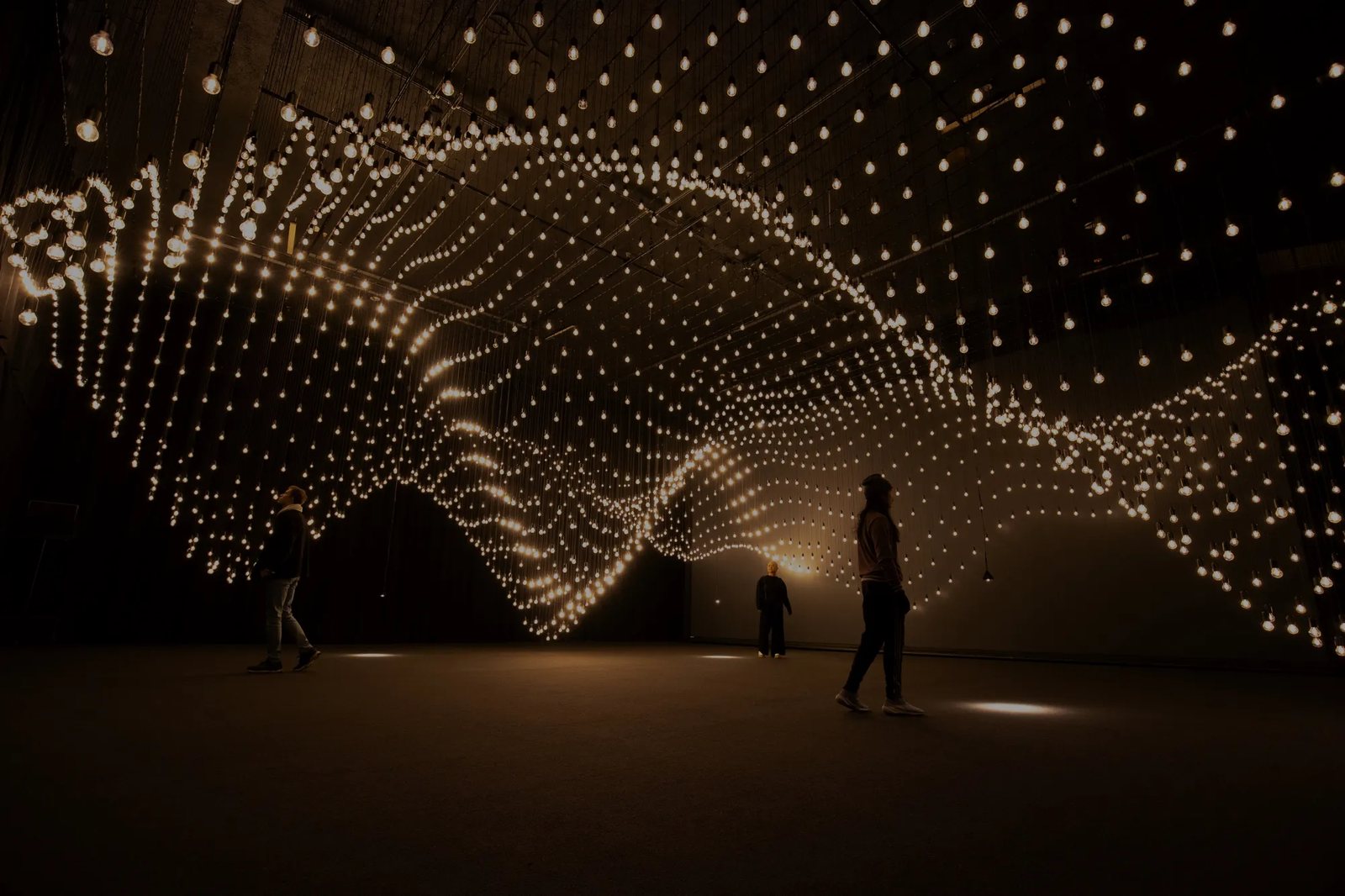
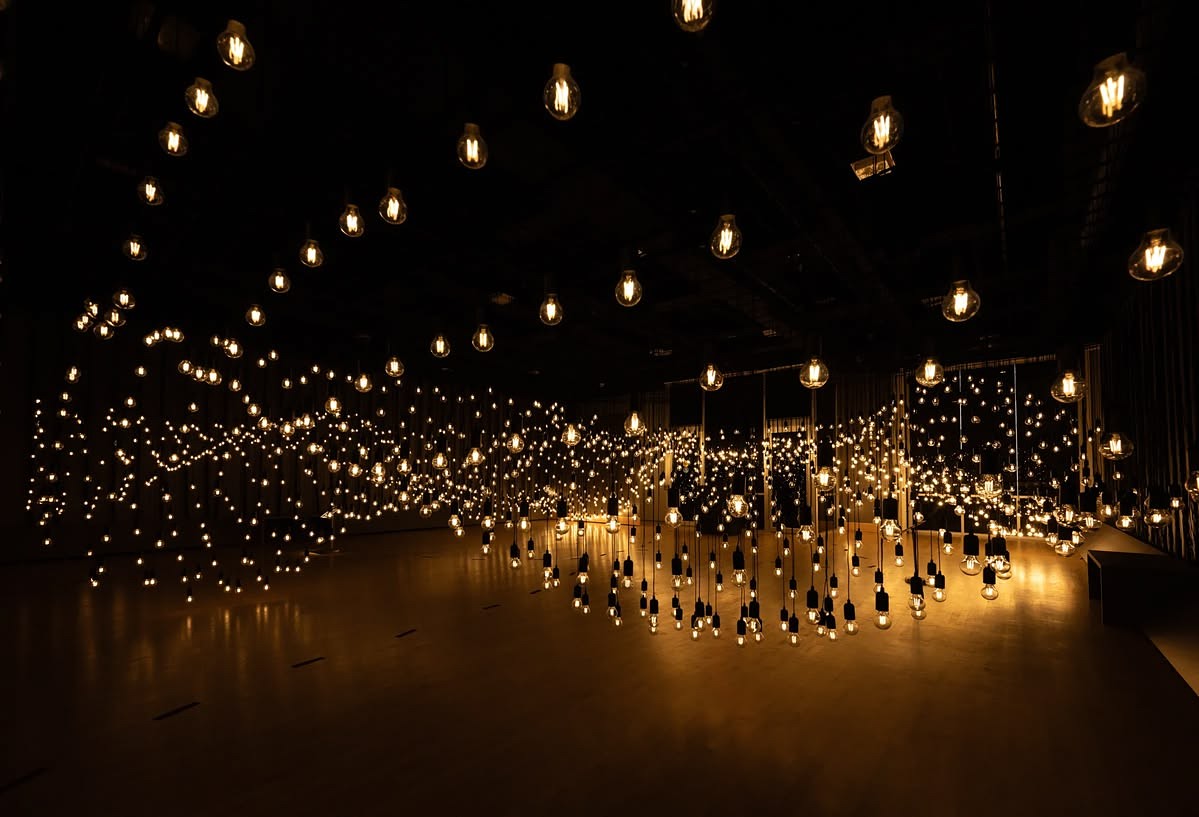
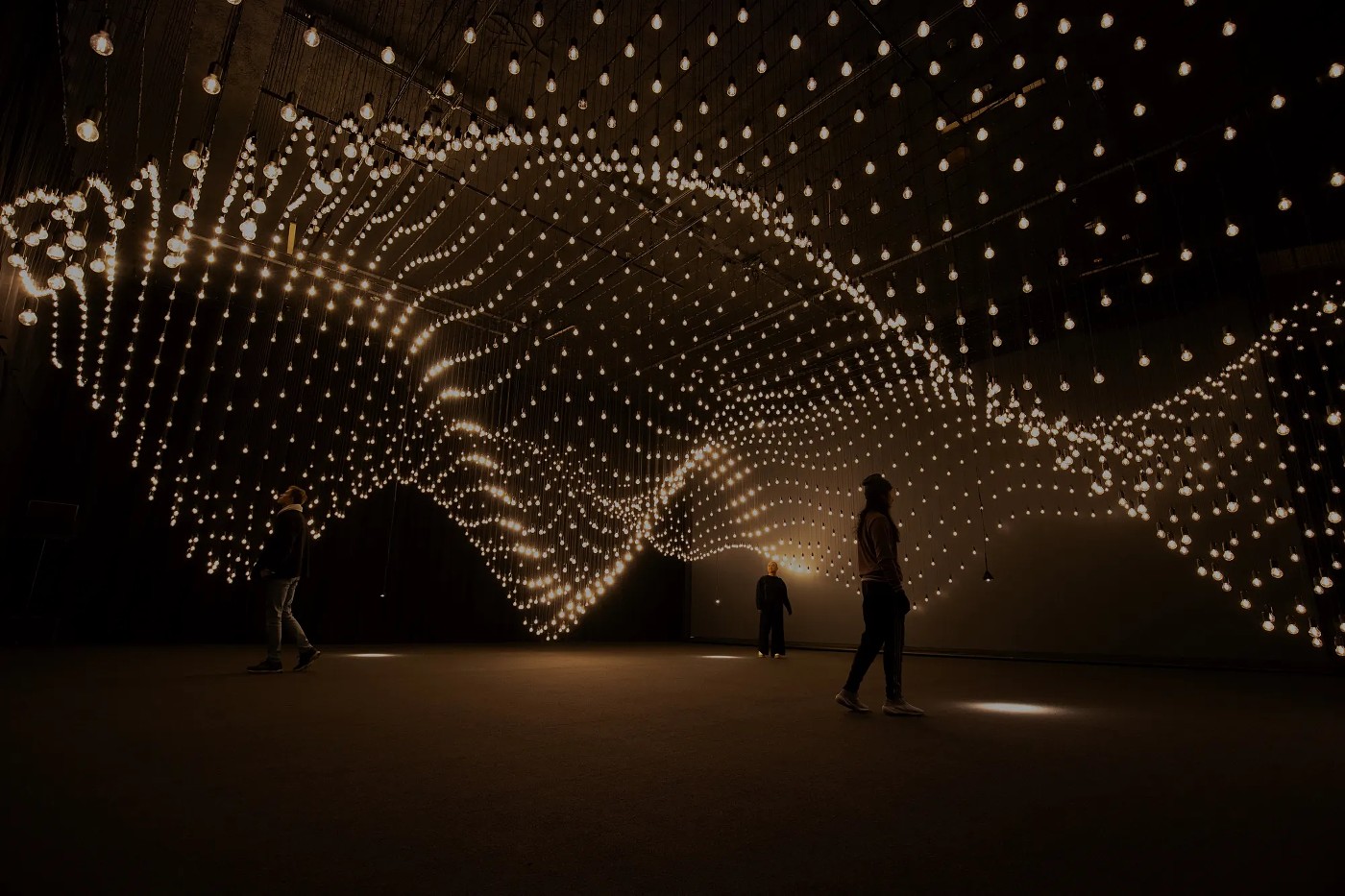
Pulse Map is a labyrinthine field of nearly 3,000 polycarbonate light bulbs. Each one glows in sync with the recorded, looping heartbeat of a past participant. According to the galleries, three suspended camera sensors let visitors record their own heartbeat and add it; as new beats arrive, the oldest are replaced. Walk through it and you are walking through a crowd of strangers who are no longer there, their pulses still flickering.
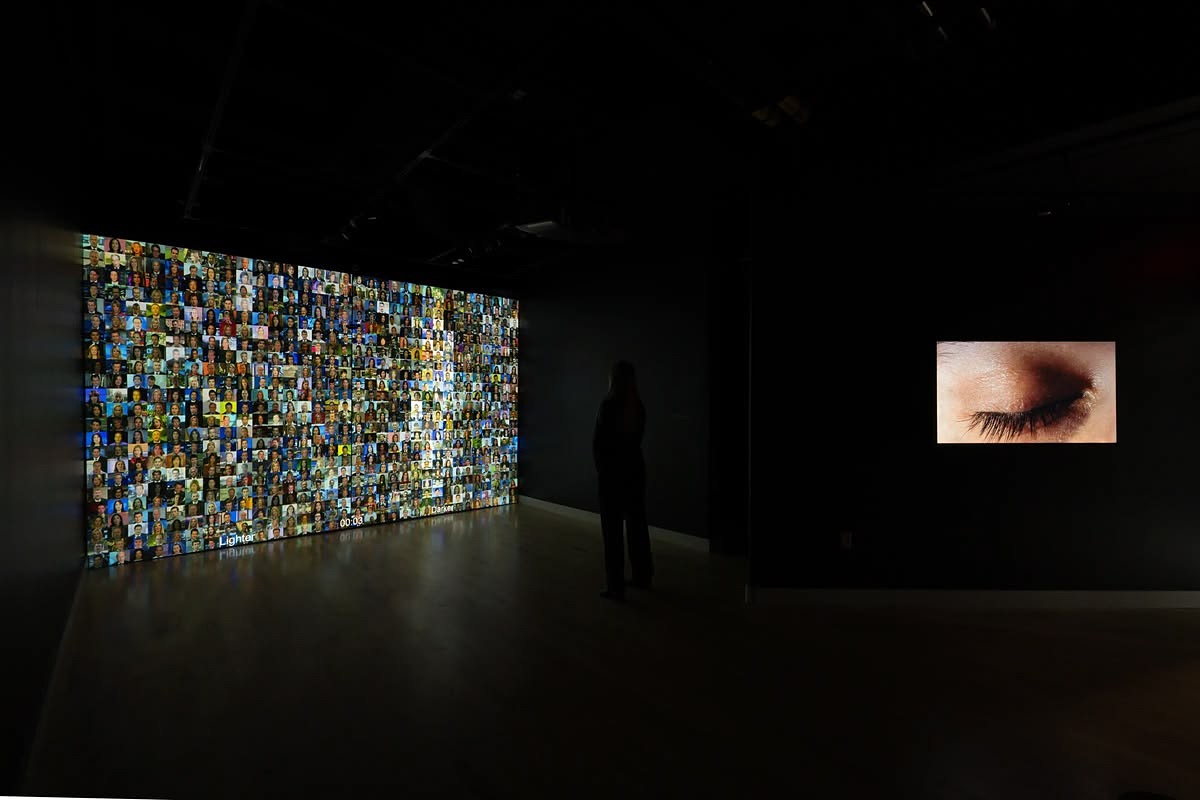
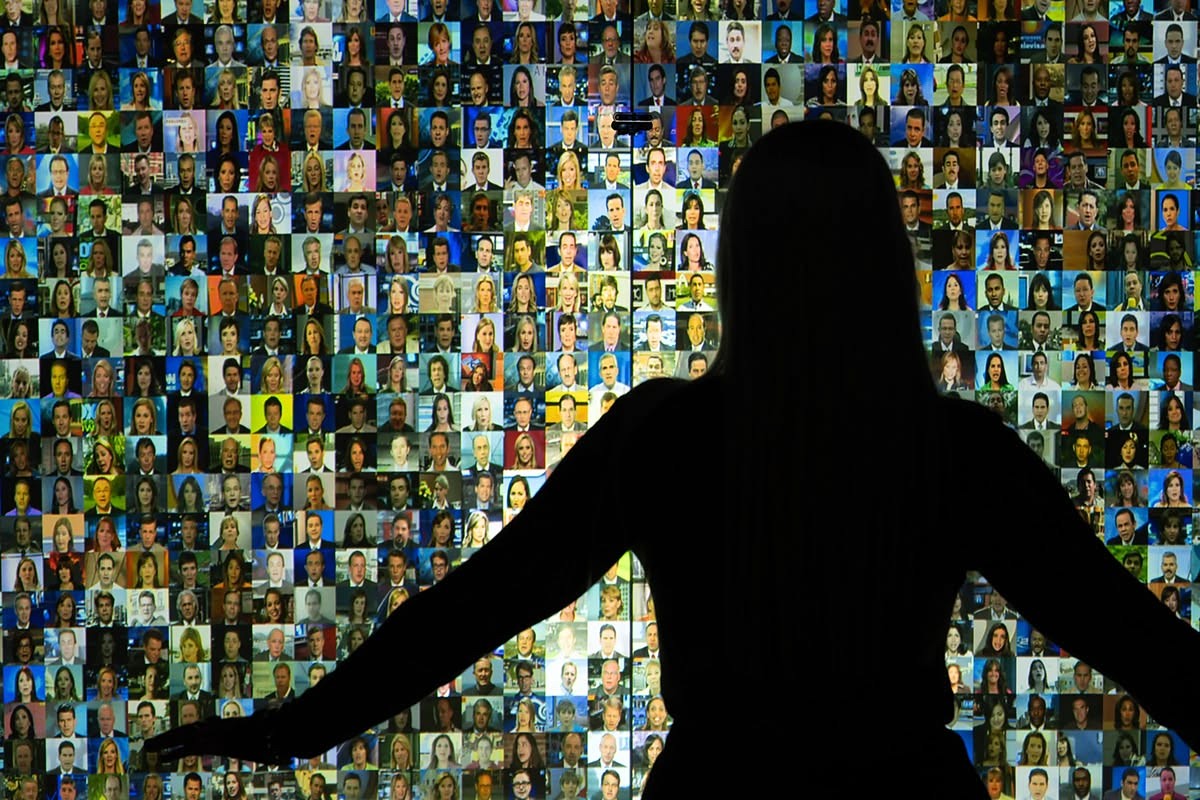
In the second gallery is Surface Tension, described by Georgetown as Lozano-Hemmer's earliest interactive work, in which a large eye follows visitors with remarkable precision. Nearby, Reporters With Borders arranges hundreds of US and Mexican news anchors into a shifting mosaic drawn from more than 1,600 clips, reorganising every five minutes by categories including gender, race and nationality, while a visitor's silhouette activates their voices. The galleries say it will be replaced in January 2027 by Eye Contact.
The galleries cite two unexpected inspirations: Adolfo Bioy Casares's novel The Invention of Morel, in which recorded projections seem alive, and Zbigniew Rybczyński's film Tango, in which people move through the same room unaware of one another. Both are about overlapping presences — exactly what Pulse Map builds out of light.
The obvious reading is surveillance, and it is not wrong. But Lozano-Hemmer is more interesting than a warning label. His systems watch you in order to include you. The galleries state that cameras are used only to run the works, that no personally identifiable information is collected and that captured data is continuously overwritten. That transparency is itself a quiet critique: imagine if every camera that watched us had to say as much.
To be watched by an artwork is to remember how often you are watched by everything else. The difference here is that the eye looks back, and for once, you get to see it doing so.