
A shoe can become a canvas without the artist becoming a footnote. That is the useful challenge in OTW by Vans x Bad Idea by CHITO: the name at the top of the collaboration is not the only name that matters. Wreckpack supplies original artwork for the Half Cab 33; Liter carries the project into apparel. The strongest way to read the release is as a network of credited practices, not a single celebrity signature.
Who actually made the marks?
Vans’ October 26, 2026 announcement identifies Bad Idea as a platform founded by CHITO to support collaboration and make space for artists. It names Wreckpack as Seoul-based and Liter as Los Angeles-based. CHITO worked with both on the overall creative and product execution. Those distinctions are essential: platform founder, footwear artist and apparel artist are related roles, not interchangeable ones.
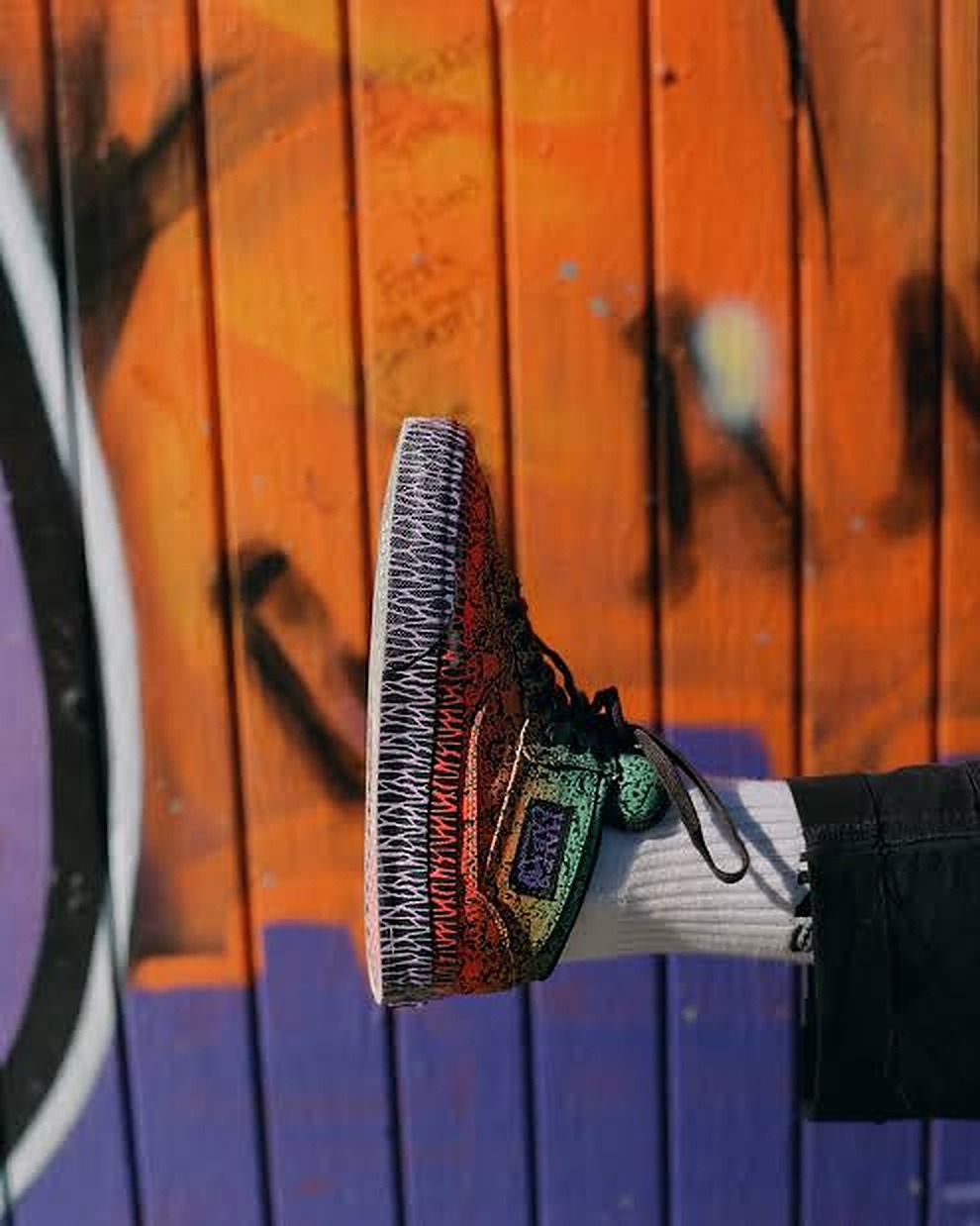
Wreckpack’s contribution brings an airbrush approach to the Half Cab 33. The familiar mid-top remains legible beneath the intervention. The product description retains a padded collar, lace-up closure and Vans’ waffle outsole, while the announcement specifies a Sola Foam ADC insole. This is an existing skate-shoe vocabulary receiving an expressive surface, rather than an entirely new silhouette being invented for the campaign.
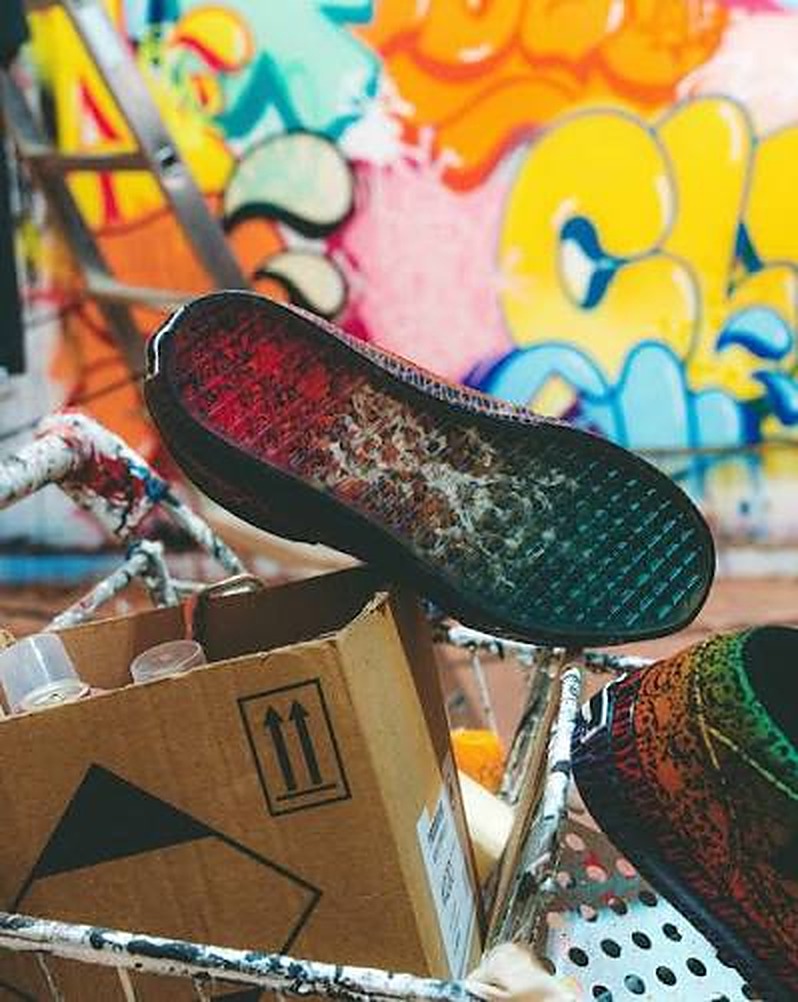
A surface is never merely a surface
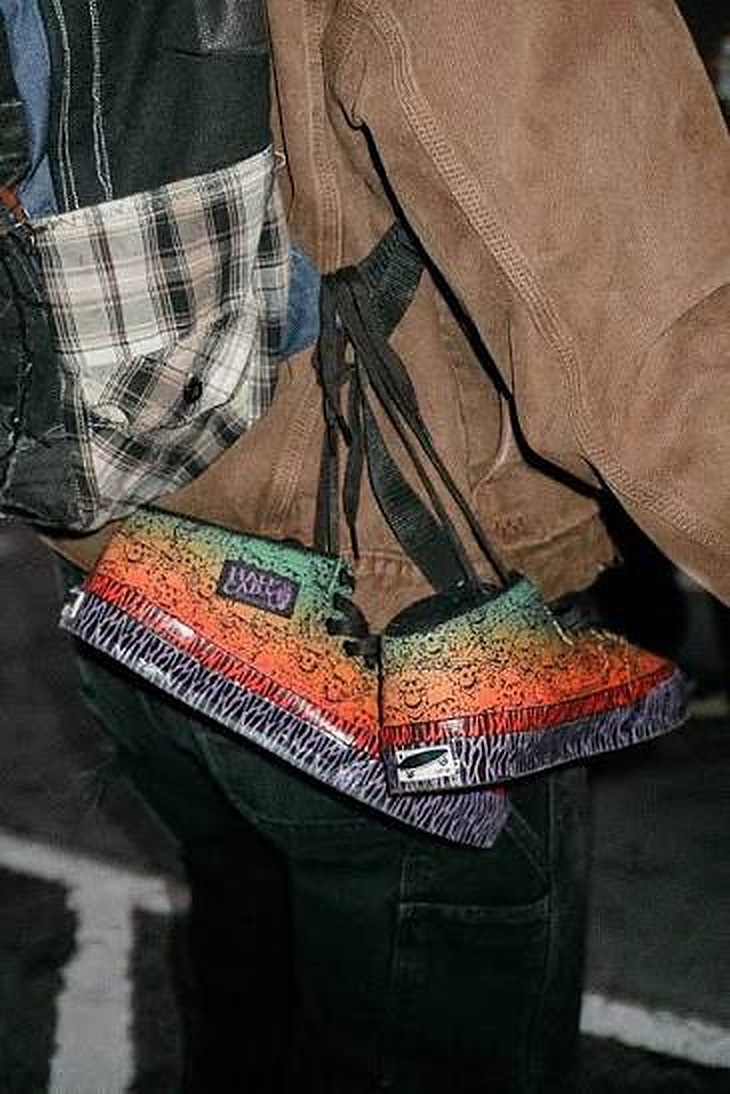
Airbrushing introduces a different sense of touch from the sharply bounded logo usually associated with branded merchandise. Its visual softness can sit uneasily against the repeatability of a manufactured shoe. That friction is the attraction. An artist’s mark enters a product system designed to make many consistent objects, and the object becomes a place to notice the translation.
It would be careless to call every pair unique or hand-painted; the checked sources do not establish either claim. The more defensible observation is about visual language. A recognisable footwear form gives the artwork a public life outside the conventional framed image, without turning the wearer into evidence of membership in a particular art scene.
Liter deserves more than an apparel footnote
The collection includes a tee and sweatshirt by Liter. Vans describes the sweatshirt as a washed-black crewneck with layered, tonal triangle appliqués across the back and hand-stitched X details at the collar and hem. These details make the garment more than a supporting billboard for the shoe. The graphics move into relief and construction.
That expansion matters for a publication interested in street art. Creative communities are often flattened when they enter a brand campaign: several contributors become one marketable name. Here the responsible critical move is to keep the individual names visible, then ask how the different techniques coexist. Airbrushed imagery and layered appliqué do not have to look identical to belong to the same project.
The drop, and the price discrepancy
Vans announced availability from October 29 at its OTW site. The press announcement listed the Half Cab at $120, the tee at $65 and the sweatshirt at $85. A checked US product listing instead displayed $150 for the shoe. Until Vans clarifies that discrepancy, a finished article should omit a definitive shoe price rather than choose the more convenient number.
The Half Cab has not been culturally transformed simply because artwork appears on it. What makes this release worth sustained attention is the possibility that a collaboration can operate as a platform rather than a spotlight. The shoe is the visible object. Keeping Wreckpack and Liter visible is the editorial responsibility.