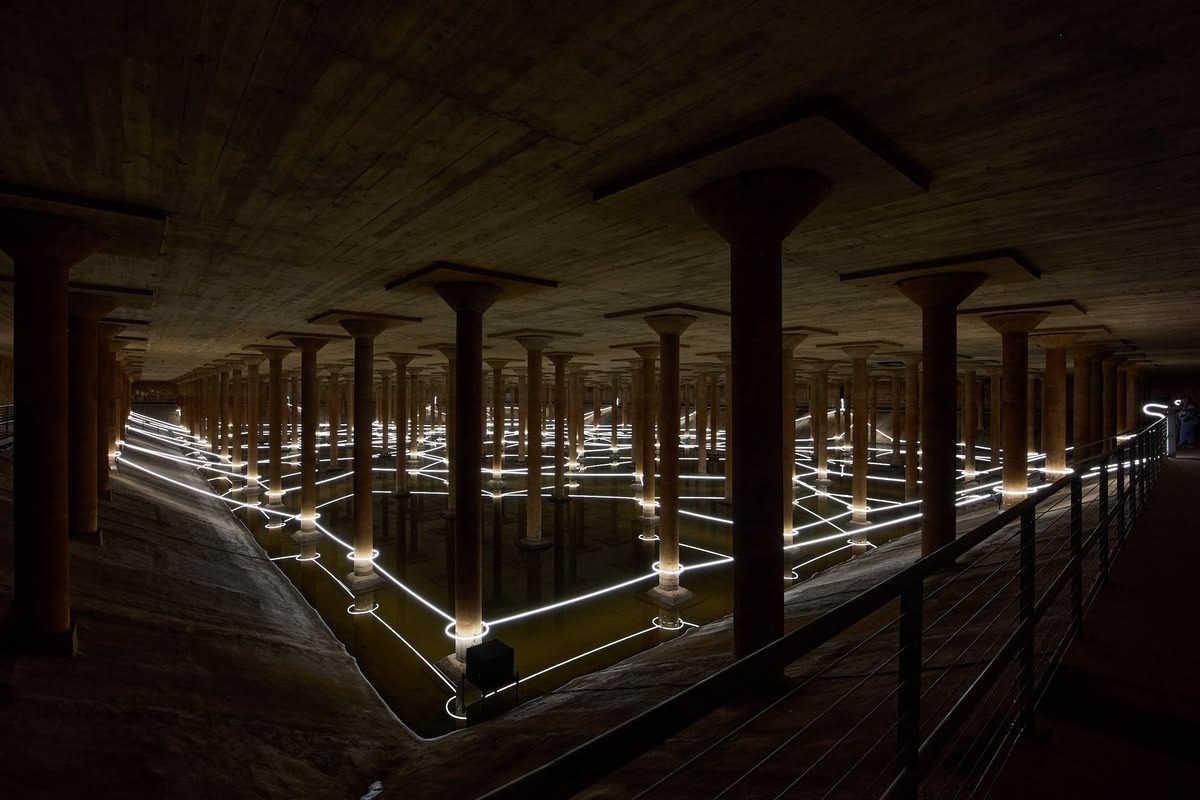
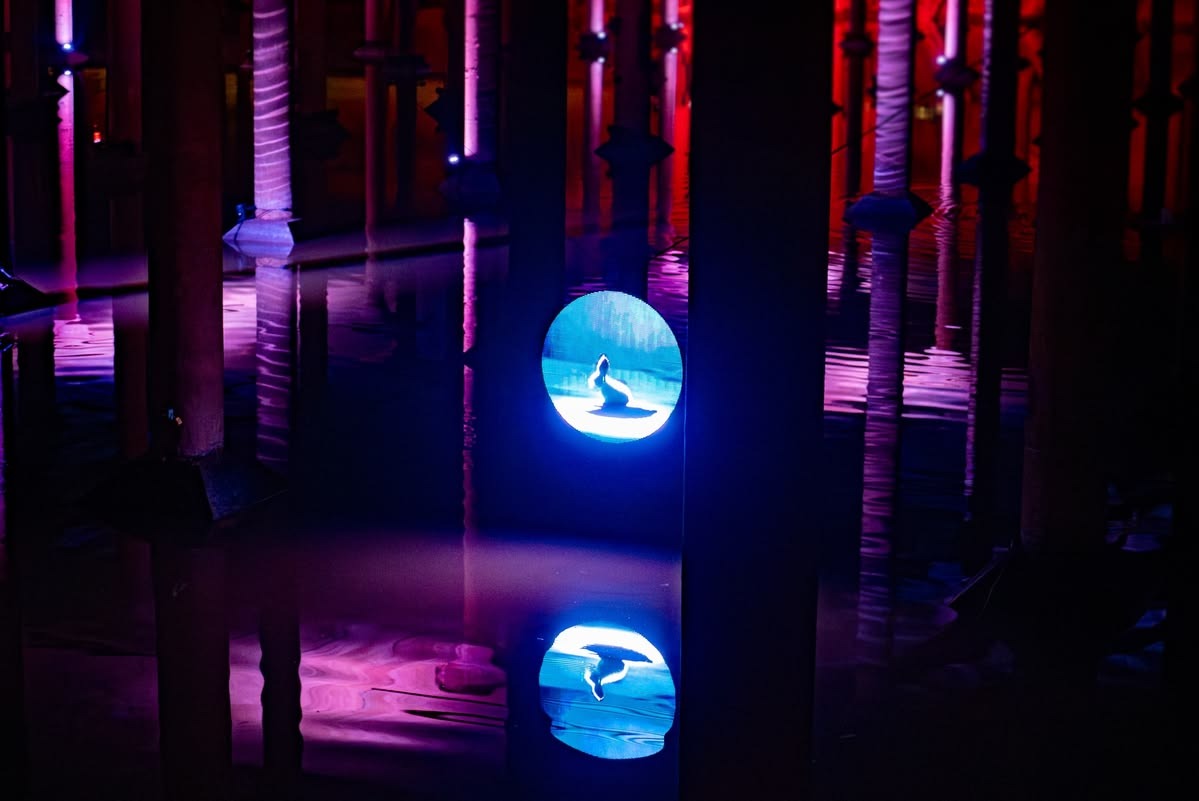
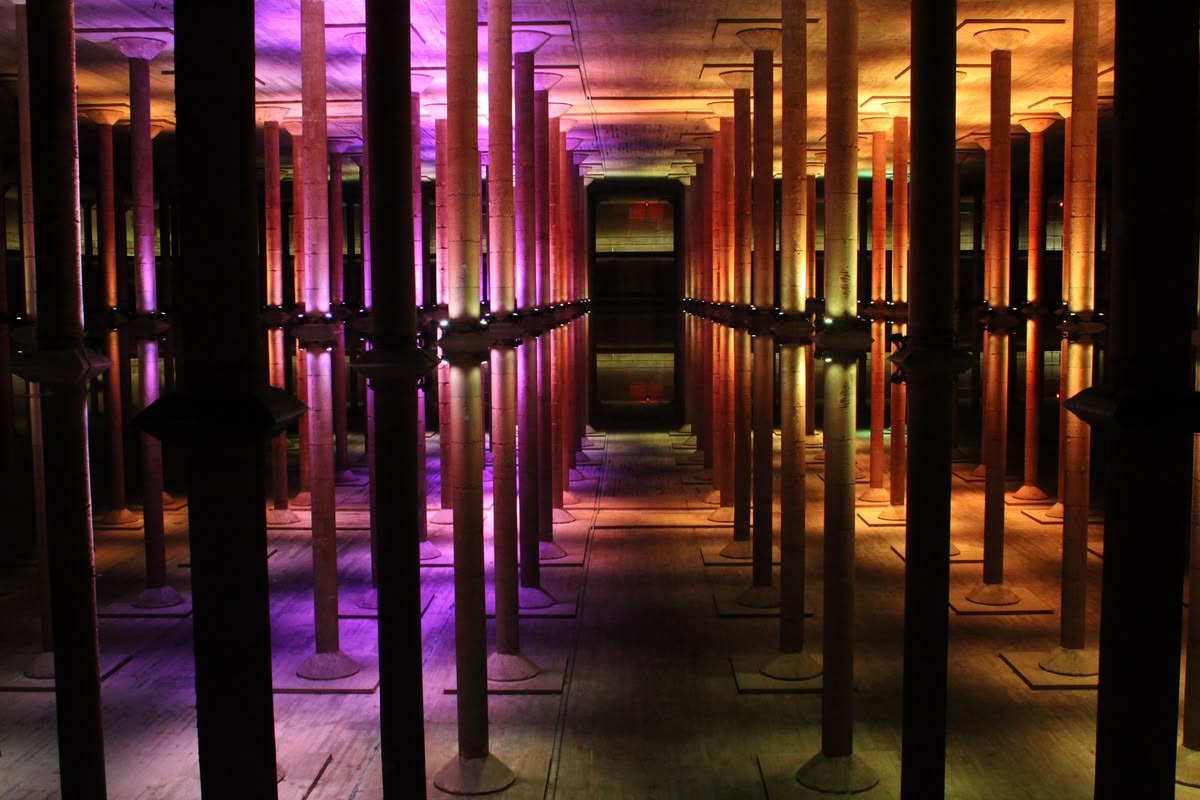
Some rooms are built for people. The Buffalo Bayou Park Cistern was built for water. It was built as a reservoir, a forest of columns designed to hold something silent and still. That history matters, because Rafael Lozano-Hemmer's Undercurrents asks the space to do the opposite of what it was made for: to carry voices.
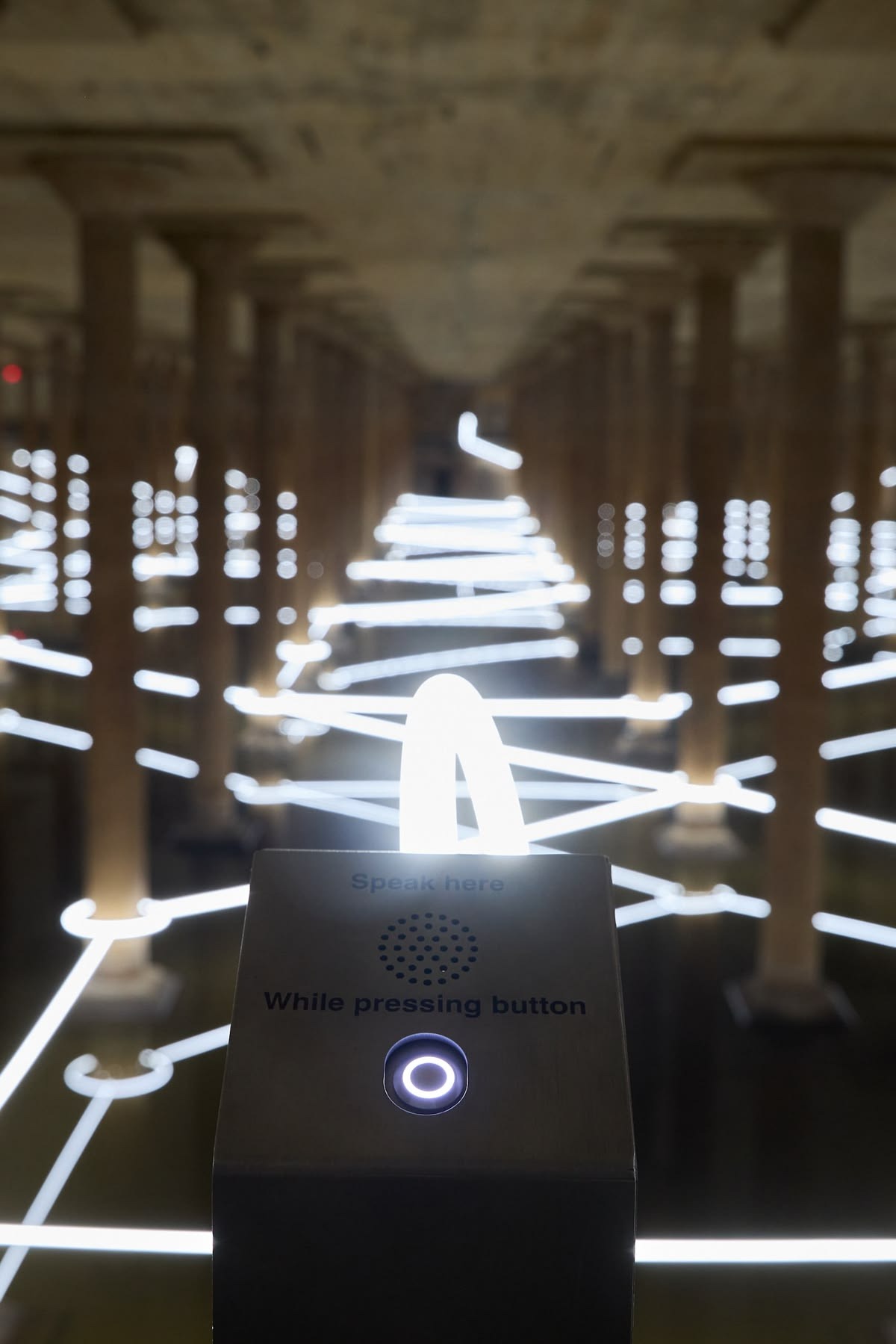
The installation, organised by Buffalo Bayou Partnership and on view from April 24, 2026 to January 24, 2027, describes itself as an exploration of communication across time, space and relationships. On paper, that sounds like every second wall text written this decade. In practice, Lozano-Hemmer has a habit of making abstractions physical. Here the physical thing is a network of LED lines that the partnership describes as roughly a mile long, pulsing in step with spoken language.
The language comes from Houston. Original works by local poets — Nick Flynn, Aris Kian, Martha Serpas, Roberto Tejada, and the Houston-born curator and writer Jennifer Teets among those listed — form the soundscape. That choice is the quiet genius of the piece. Lozano-Hemmer could have filled the room with generic sound design. Instead, the city speaks through writers who know its floods, its coastlines, its losses. Serpas, a native of Galliano, Louisiana, has produced a documentary on coastal land loss. In a building engineered around water, that is not a small echo.
Visitors are invited to speak, listen and reflect, and their presence feeds a space the organisers describe as living and ever-changing. This is the signature move of Lozano-Hemmer's practice: the artwork does not exist fully until someone walks in. Architecture stops being a container and becomes an instrument. The audience is not an audience; it is part of the circuit.
What makes Undercurrents interesting, rather than merely pretty, is the tension between permanence and passing. A reservoir is about storage. Poetry read aloud is about the opposite — it lives for the length of a breath and disappears. Light moving along those lines turns each phrase into a travelling signal, visible for a moment, then gone down the corridor of columns. The Cistern was built to hold something. Now it holds what we say, for exactly as long as we are saying it.
There is a version of immersive art that is all spectacle and no spine: projections that would look the same in any warehouse on earth. Undercurrents resists that by being stubbornly specific. It belongs to this room, this city, these writers. Take it anywhere else and it would be a different work.
It also continues a lineage. The Cistern has hosted Kelly O'Brien's Cistern Illuminated, Rachel Rossin's Haha Real, and Magdalena Fernández's Rain. Each artist has had to negotiate with a space that is overwhelming by design. Lozano-Hemmer's answer is to stop competing with the architecture and start listening to it.
The best public art makes you aware of something you were already doing without noticing. Here, it is the simple act of speaking into a room and assuming the room does not care. Underneath Houston, for a few months, it does.